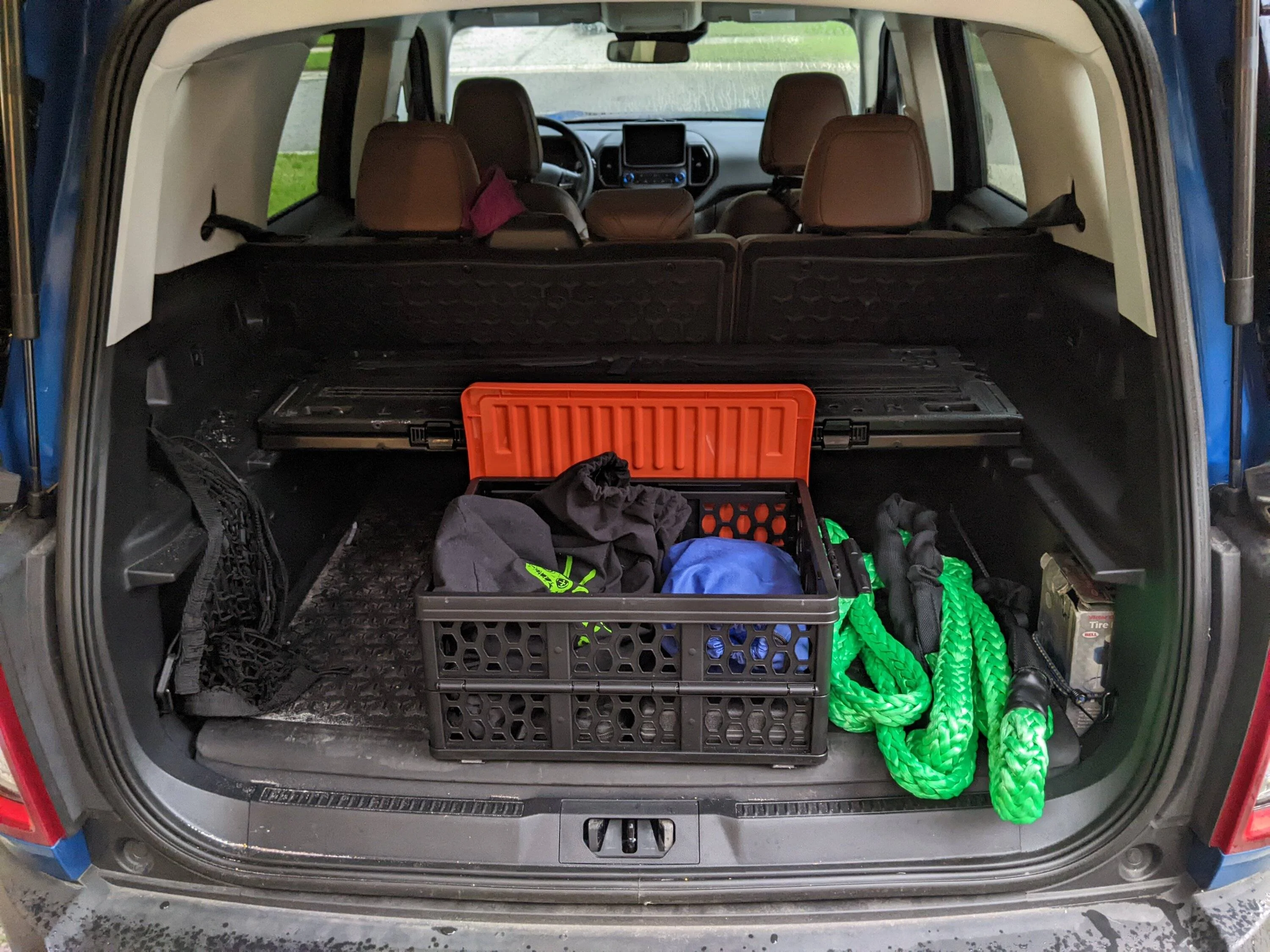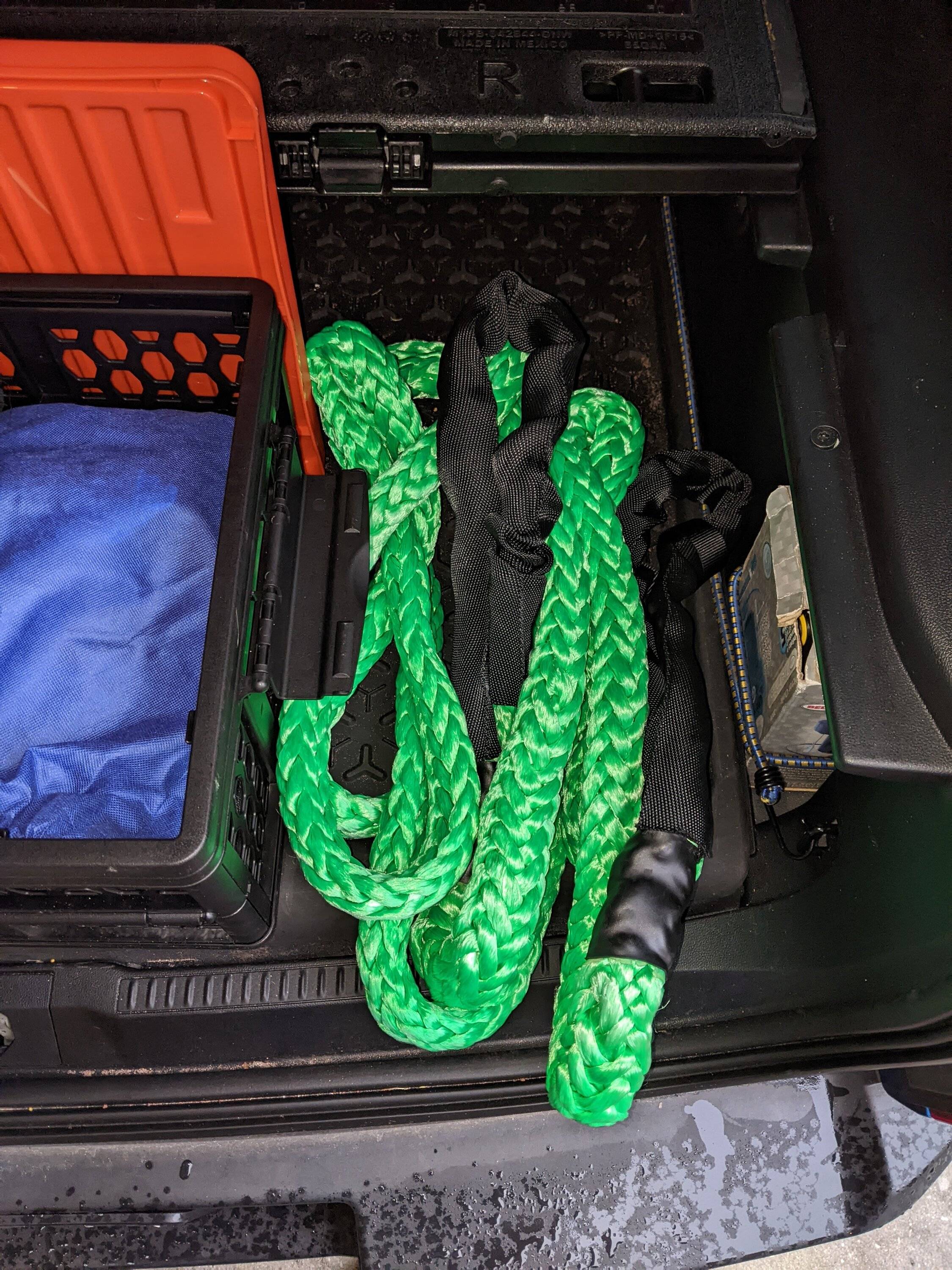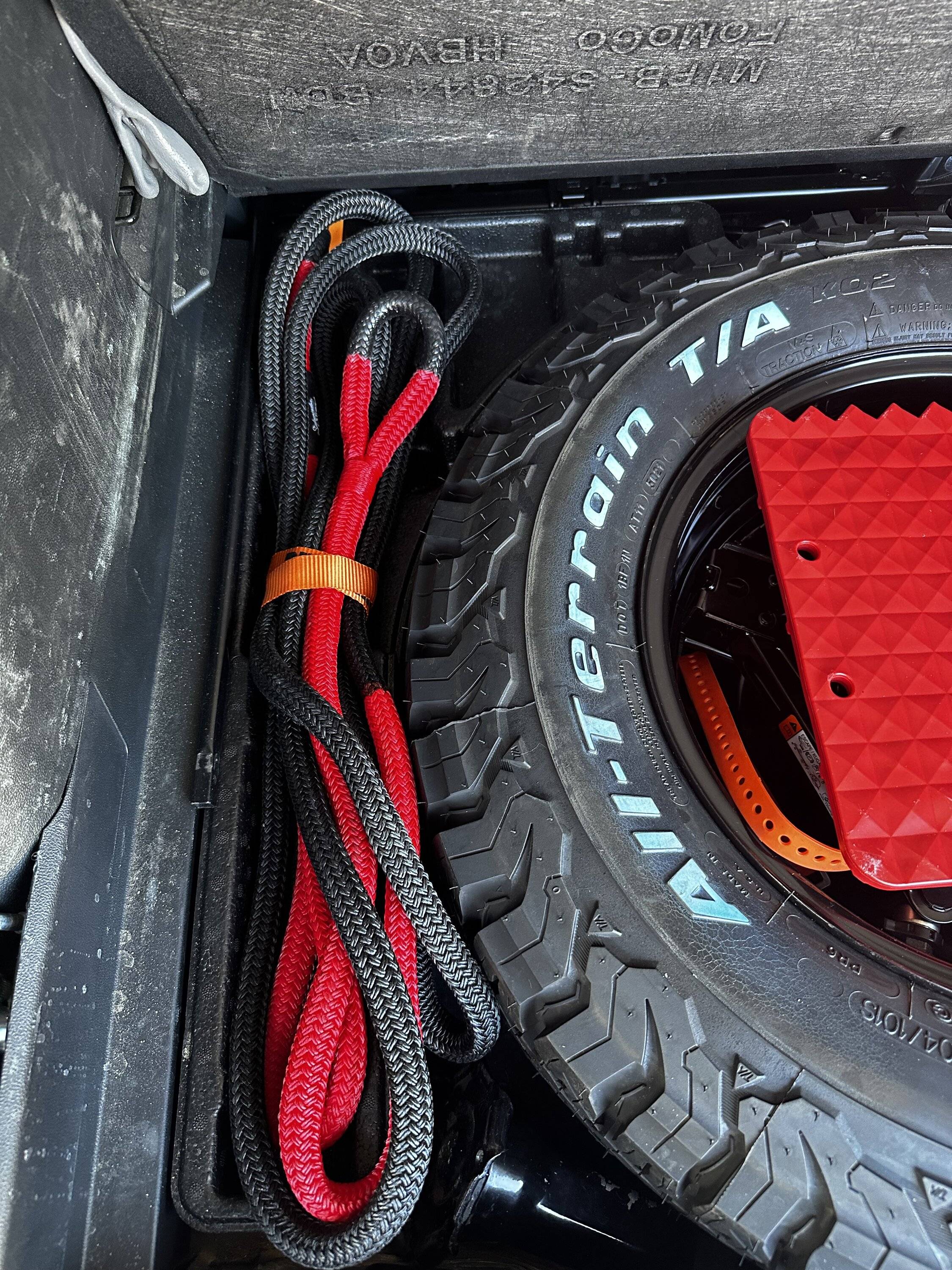

There’s a video posted on this thread: https://www.broncosportforum.com/forum/threads/video-recovery-rope-testing-project-farm.9263/
A few things missing from the discussion:
1. The response of a non-metallic round rope/sling of larger diameter will be stiffer than the same non-metallic material of a smaller diameter. This was touched on above. The rope can be thought of as a spring that only works in tension. Stiffness or spring rate of a material is equal to AE/L, where A is your cross sectional area, E is the material’s Young’s Modulus and L is the (rest) length of the spring…rope in this case. This also assumes constant, linear behavior.
2. Different materials have different properties. A steel rope will behavior and respond differently than Nylon than Dyneema than Spectra than etc.
3. Nylon absorbs moisture and weakens over time by greater than 15% and abrades when exposed to salts and dirt. They will never be clean and pure after exposure. This material is not best to use in critical applications and typically prohibited from use, pending margin of safety, in overhead lift maritime environments.
4. The ASME B30 series covers quite a bit on factors of safety, working load and proof loads of overhead slings should there be an interest to read more.
5. Mass of the vehicle is only part of the equation. What is the incline? What is the coefficient of friction? I.e., are you stuck in the mud or on an icy slope.
6. It’s easier to make a longer rope shorter than the other way around. Learn to tie knots that can be highly loaded or investigate pulley blocks.
That’s my engineer comments having worked with various vendors/contractors and technical authorities in the Dept. of Army and Navy. Here though, we are talking recreational off road recovery. So the best rope is the one that works and gets you unstuck.
More reading:
https://www.therangerstation.com/tech_library/pdf_documents/what_most_people_dont_know_about_winching.pdf
A few things missing from the discussion:
1. The response of a non-metallic round rope/sling of larger diameter will be stiffer than the same non-metallic material of a smaller diameter. This was touched on above. The rope can be thought of as a spring that only works in tension. Stiffness or spring rate of a material is equal to AE/L, where A is your cross sectional area, E is the material’s Young’s Modulus and L is the (rest) length of the spring…rope in this case. This also assumes constant, linear behavior.
2. Different materials have different properties. A steel rope will behavior and respond differently than Nylon than Dyneema than Spectra than etc.
3. Nylon absorbs moisture and weakens over time by greater than 15% and abrades when exposed to salts and dirt. They will never be clean and pure after exposure. This material is not best to use in critical applications and typically prohibited from use, pending margin of safety, in overhead lift maritime environments.
4. The ASME B30 series covers quite a bit on factors of safety, working load and proof loads of overhead slings should there be an interest to read more.
5. Mass of the vehicle is only part of the equation. What is the incline? What is the coefficient of friction? I.e., are you stuck in the mud or on an icy slope.
6. It’s easier to make a longer rope shorter than the other way around. Learn to tie knots that can be highly loaded or investigate pulley blocks.
That’s my engineer comments having worked with various vendors/contractors and technical authorities in the Dept. of Army and Navy. Here though, we are talking recreational off road recovery. So the best rope is the one that works and gets you unstuck.
More reading:
https://www.therangerstation.com/tech_library/pdf_documents/what_most_people_dont_know_about_winching.pdf
Sponsored




 . But I do have a problem with propping up cheap, Chinese garbage on Bezosmart, even if they are price effective for that one off or two off use, in which the product just gets the job done. Its just something I can't look away from...but point taken.