

- First Name
- Sherman
- Joined
- Dec 1, 2021
- Threads
- 29
- Messages
- 1,817
- Reaction score
- 1,862
- Location
- MIDDLETOWN, MD
- Vehicle(s)
- '22 Badlands ordered 12/17/2021 - Arrived 3/25/22
People driving identical vehicles with the same tires can have widely varying experiences -- as evidenced by the posts in this thread.
One driver's "great rain tire" is another's crazy dangerous tire -- on the same vehicle, same tread depth.
That said, people typically do not measure and report tread depth, and needless to say, that is o major factor. Others are:
* Speed
* Tire pressure
* Load
* Water depth
Water depth can vary a LOT. Here in Maryland we have some stretches of interstate that are: correctly graded; have no ruts; and have a top layer of asphalt that is porous -- the rain seeps through to the layer underneath and runs out onto the shoulder. That is about as good as it gets. There's usually no need to slow down unless it's really pouring.
The other extreme is a highway that's not graded well and has deep ruts that hold water. That can cause any vehicle to hydroplane, even at relatively slow speeds.
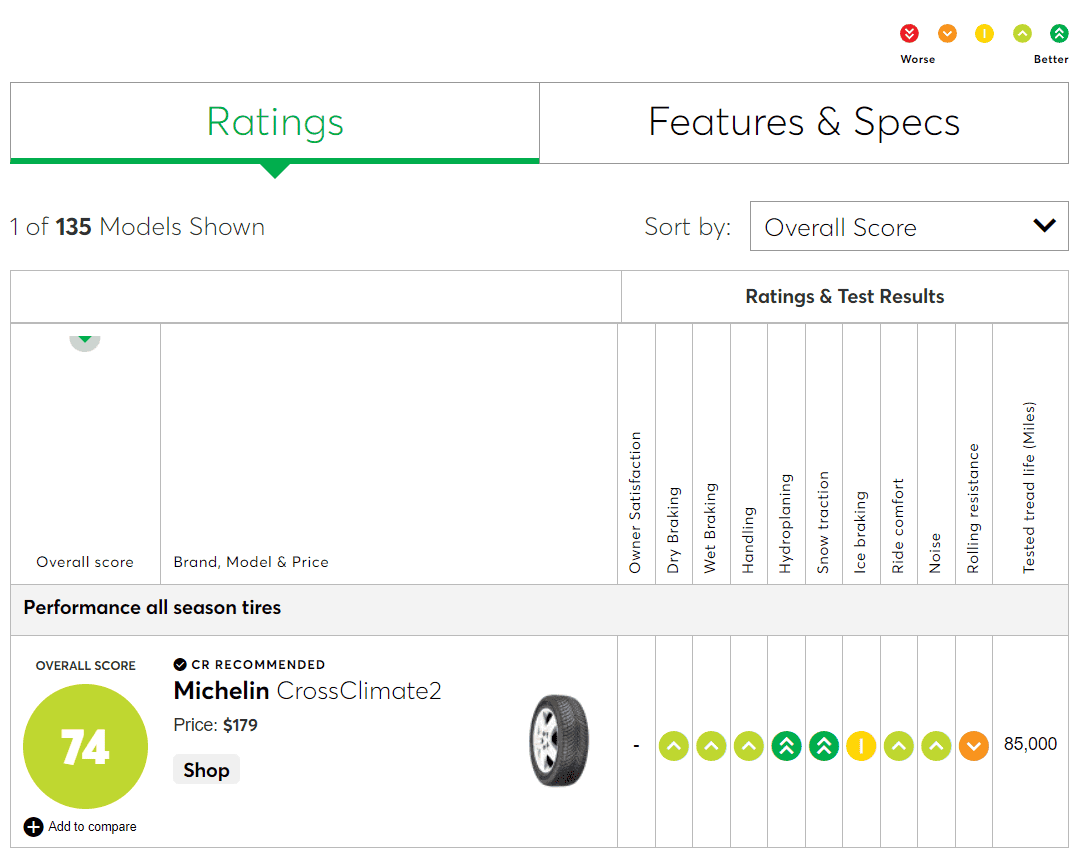
The best way I know of to find tires that resist hydroplaning well is to check CR. There are other sources of info, but they may not be entirely objective (tire retailers, car magazines).
Before buying our BL, I checked the CR ratings of the tires. I think I posted a screen shot of that here on another thread. Both the stock and optional tires were OK, but I can't recall the various ratings -- like "anti-hydroplaning" -- now. I think they were both 4/5, or "very good." IOW, there are better choices, but I didn't feel like I needed to immediately replace them (which I did with my 2002 WRX).
One driver's "great rain tire" is another's crazy dangerous tire -- on the same vehicle, same tread depth.
That said, people typically do not measure and report tread depth, and needless to say, that is o major factor. Others are:
* Speed
* Tire pressure
* Load
* Water depth
Water depth can vary a LOT. Here in Maryland we have some stretches of interstate that are: correctly graded; have no ruts; and have a top layer of asphalt that is porous -- the rain seeps through to the layer underneath and runs out onto the shoulder. That is about as good as it gets. There's usually no need to slow down unless it's really pouring.
The other extreme is a highway that's not graded well and has deep ruts that hold water. That can cause any vehicle to hydroplane, even at relatively slow speeds.
The best way I know of to find tires that resist hydroplaning well is to check CR. There are other sources of info, but they may not be entirely objective (tire retailers, car magazines).
Before buying our BL, I checked the CR ratings of the tires. I think I posted a screen shot of that here on another thread. Both the stock and optional tires were OK, but I can't recall the various ratings -- like "anti-hydroplaning" -- now. I think they were both 4/5, or "very good." IOW, there are better choices, but I didn't feel like I needed to immediately replace them (which I did with my 2002 WRX).
Sponsored