

We have a Ford rep on here. Have you heard anything about relocating the ECU? I'm spooked to do any deep water crossings.
Sponsored


Same here, so I won't be using my BS for that. If I want to forge water, I'll buy a boat.We have a Ford rep on here. Have you heard anything about relocating the ECU? I'm spooked to do any deep water crossings.
Get it!Driving routinely in water is hard on vehicles. I used to ride dirt bikes in the Canadian River which is slightly salty. It made a mess of my bikes. I have a 23 BL scheduled to be built next week and I'd like to know where the ECU is on it. Soon as it comes in I plan to slap some 245 Wildpeaks on it and head to Colorado.
I an unsure of the bl location but in my 22 big bend it is in the driver side fender on the engine side of the wheel wellDriving routinely in water is hard on vehicles. I used to ride dirt bikes in the Canadian River which is slightly salty. It made a mess of my bikes. I have a 23 BL scheduled to be built next week and I'd like to know where the ECU is on it. Soon as it comes in I plan to slap some 245 Wildpeaks on it and head to Colorado.
Have you both (@Bronclahoma @Alfa 2407) scrolled back to Post #23? (and there is other info scattered around this thread before and after #23). I think all BS models have the module located in the same spot shown in #23. Lots of discussion about relocating but just talk. And there are other things subject to potential water intrusion discussed in this thread and in other threads so a search is needed to locate that discussion. Some people experienced damage when crossing “deep” water and others did not but no way to know how long their vehicle had been in the water since that info wasn’t reported.I an unsure of the bl location but in my 22 big bend it is in the driver side fender on the engine side of the wheel well
Must have over looked thatHave you both (@Bronclahoma @Alfa 2407) scrolled back to Post #23? (and there is other info scattered around this thread before and after #23). I think all BS models have the module located in the same spot shown in #23. Lots of discussion about relocating but just talk. And there are other things subject to potential water intrusion discussed in this thread and in other threads so a search is needed to locate that discussion. Some people experienced damage when crossing “deep” water and others did not but no way to know how long their vehicle had been in the water since that info wasn’t reported.
Or are you referring to something else?

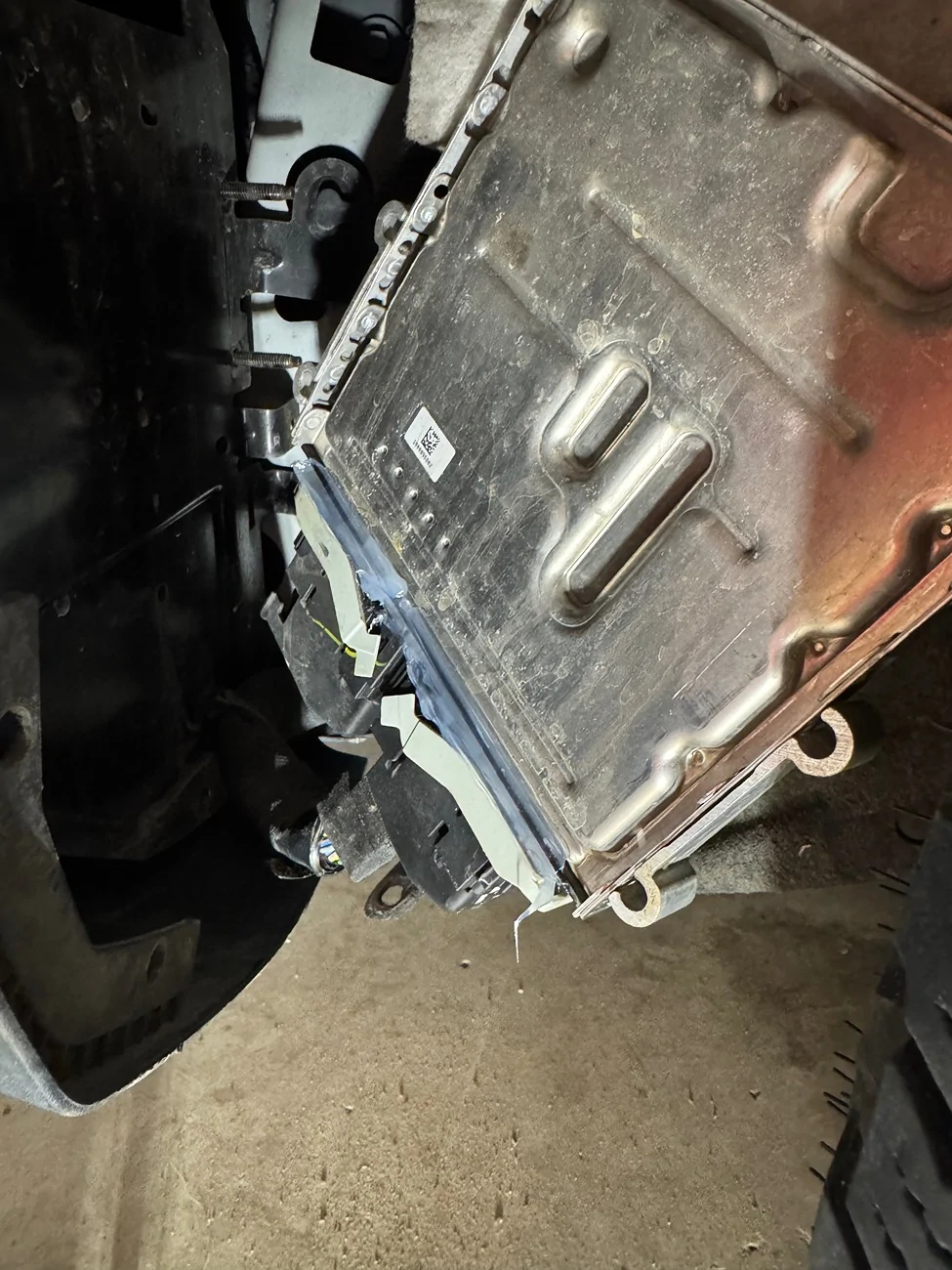
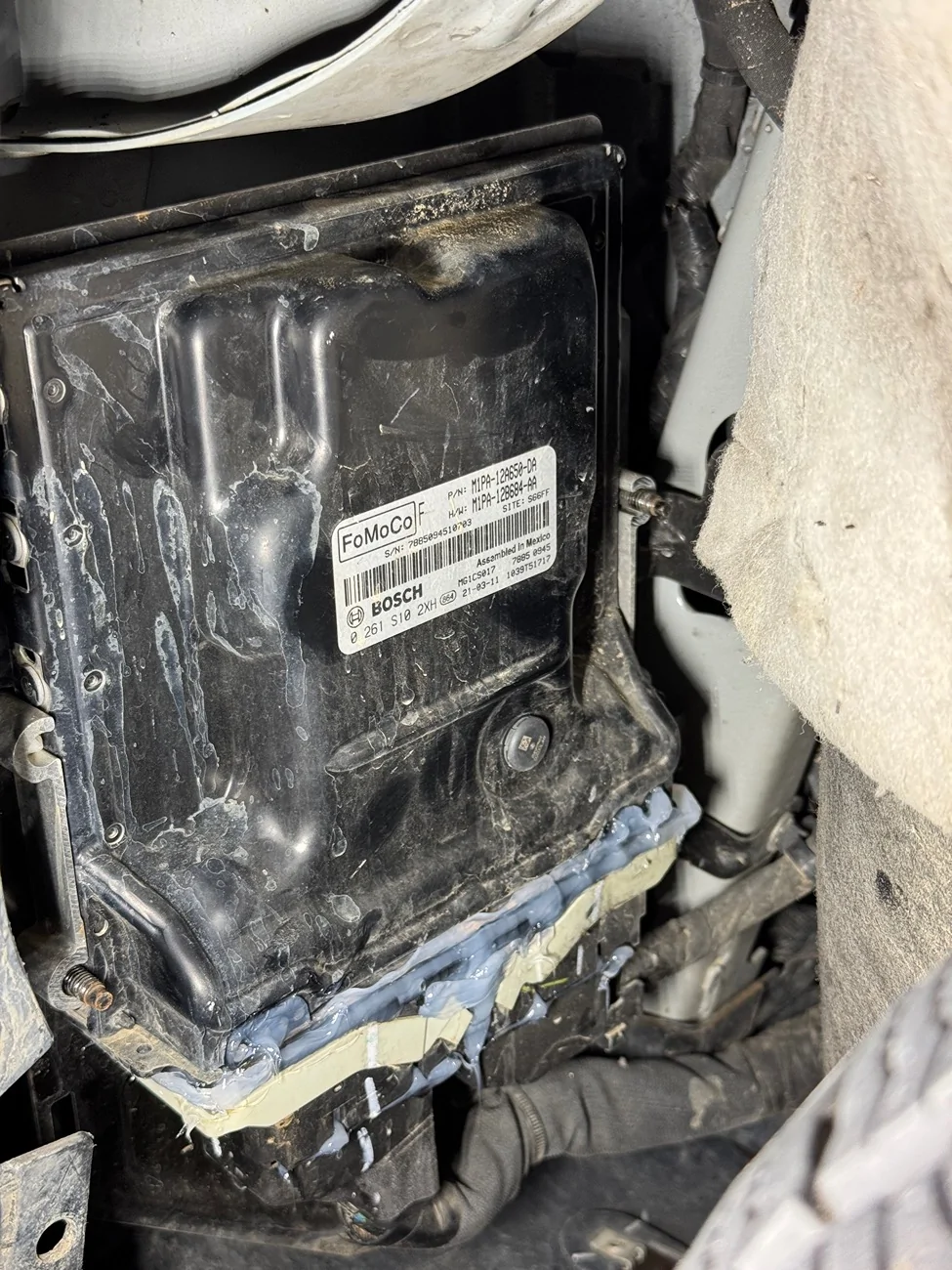

Why not disconnect the battery, and then release the clips going into the PCM and actually put the dielectric grease on the pins rather than around the outside? You were already there…Necro-ing this thread, after a few years and some searching, this is still the only reported incident I can find of this happening. I realize not a ton of people are fording with their mini fords, but enough have without issue (myself included) I think OP purely just got unlucky with a missing/failing gasket assembly on their sport between the PCM and connector.
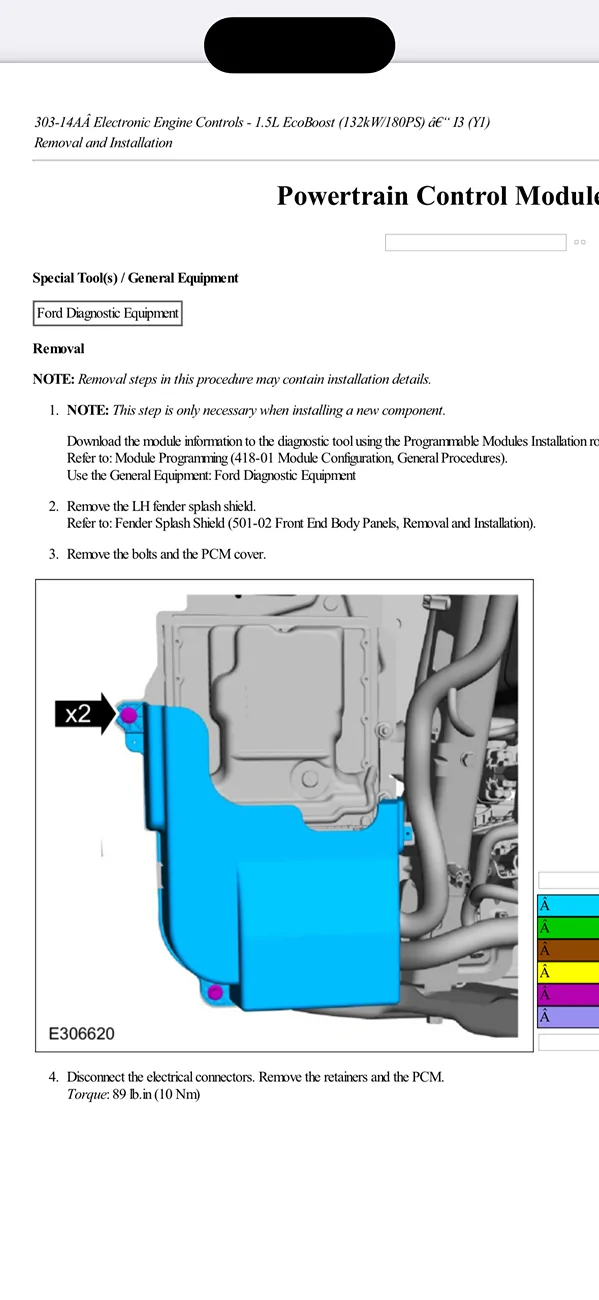
Wanted to share some cheap insurance if you do intend to cross some streams. Based on the autopsy by OP water got into the connectors between the PCM and the main harness, corroding the pins. Probably had been happening for a while based on his pictures. The PCM is super easy to access by turning the wheel to the left and removing part of the fender liner. Get yourself some dielectric grease, get in there, and GREASE the seams as much as you can.
The PCM itself is a sealed unit and is fine to take a lil dunk, this will help ensure moisture stays out of the connectors.
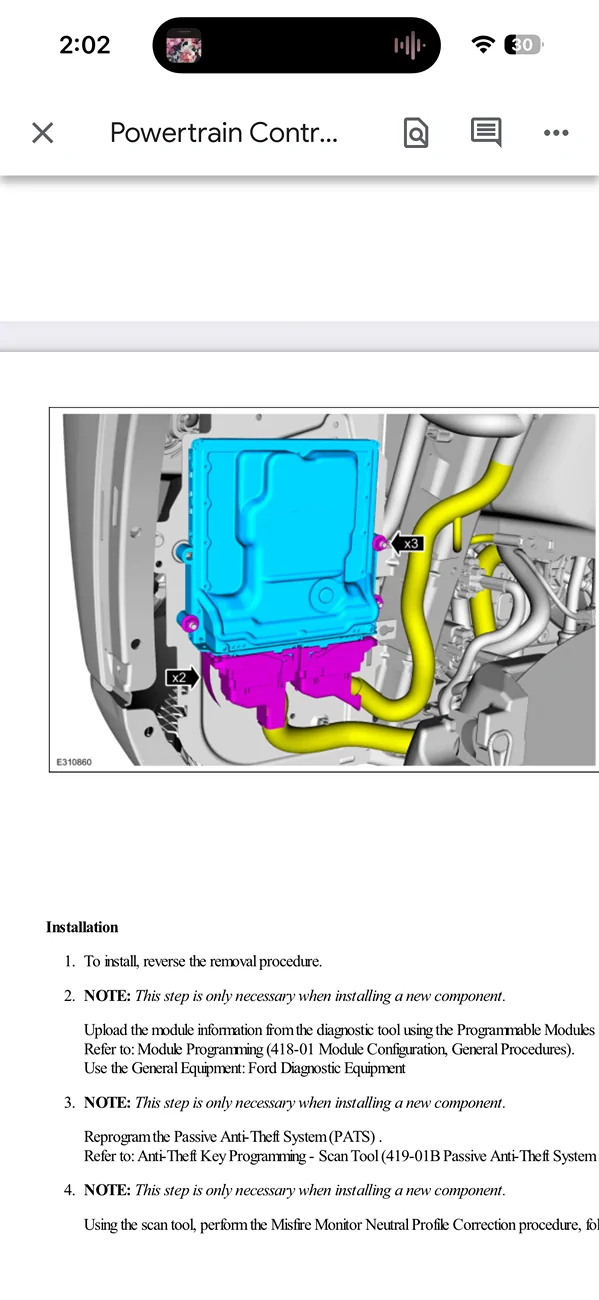
Relevant tech manual screenshots for removing PCM (I recommend unbolting the whole PCM so you can do the backside too)

GREASE THAT SUCKER (dielectric grease seals things up nicely and repels water quite effectively)

Seriously this takes like 20 minutes; the stock seals are probably fine, but never hurts to make sure!
I definitely considered it, but given the lack of problems anyone else has had I decided I didn’t want to disturb/compromise the OEM sealant by doing so. I was comfortable just adding an extra layer of water ingress protection around it, if you want to disconnect the clips and get it all up in there you can definitely can!Why not disconnect the battery, and then release the clips going into the PCM and actually put the dielectric grease on the pins rather than around the outside? You were already there…
Could you please link me to some? I’ve certainly seen a lot of people TALK about this on different platforms, but they literally all link back to this same thread or video about the same guy and this same incident. Would love to compare them to see if it’s the same failure pointThere isn’t just one owner reporting this issue and it’s not a matter of just driving through deep water that could cause the issue
it also has to do with how long the vehicle is submerged with those connectors under water - a number of people have driven through deep enough water and had no issues, the question to ask is how long was it submerged and are they willing to just let the vehicle sit in deep water long enough for those connectors to suffer water intrusion - it might not be that much time - there is no open published test data from Ford which states how long the submerged connections will remain water tight
From the various posts I’ve seen, about 5 minutes or so caused water intrusion and subsequent damage
Over the past 3+ years I’ve seen several on this forum and several more on the Fb Bronco Sport group - perhaps a total of 6 different owners which is not very many but most people aren’t going to post the results of damaging their vehicle fording into deep waterCould you please link me to some? I’ve certainly seen a lot of people TALK about this on different platforms, but they literally all link back to this same thread or video about the same guy and this same incident. Would love to compare them to see if it’s the same failure point
I guess point still stands for the wider forum; has ANYONE spotted PCM damage from water intrusion? I’ve dug through both the Bronco sport forum, the subreddit, and the Facebook group. Every time someone discusses water fording, there are a few of comments going “Watch out, the PCM is in the wheel well” and then link this forum (or his YouTube video) but are not speaking about their own electronic failure. I sure can’t find it, so it probably really isn’t that widespread of a problem.Over the past 3+ years I’ve seen several on this forum and several more on the Fb Bronco Sport group - perhaps a total of 6 different owners which is not very many but most people aren’t going to post the results of damaging their vehicle fording into deep water
I didn’t save those links from owners but I would say most or all of the 6 were in sufficiently deep water for a long enough period of time for water intrusion to occur depending on how well those connectors actually hold out water intrusion - damage to the electrical system did occur in each of the cases
I’ve tried to find published test reports but no luck there - Ford only states the Bronco Sport can ford water up to 23.6” at “fairly low speeds” (no spec I can find on what is low speed)
This is all I’ve been able to come up with but I haven’t independently verified any of these numbers:
Off-Roading Specs:
Water Fording 23.6": Warning: at 17” of water the ECU mounted just forward of driver side front tire is 100% under water. ECU is a “sealed” module but is unknown how long the ECU can be submerged in water before damage occurs.
Ground Clearance 8.6" (8.8” Badlands (FE) 235/65/R17, 8.6” Badlands (FE) 225/65/R17, 7.9” Outerbanks, 7.8” Base/Big Bend.
Note: Badlands/FE have 0.5” higher suspension, Badlands with 235/65/R17 are 0.5” taller than 225/65R17 for a total 1” higher.