

Mark S.

Badlands
Well-Known Member
First Name
Mark
Joined
Oct 30, 2021
Threads
119
Messages
6,733
Reaction score
13,152
Location
St. Jacob, IL
Vehicle(s)
2021 Badlands | 2020 Escape
You're right that the turbo is a major restriction, but what happens after the turbine still matters. If you lower the pressure on the exhaust side of the turbo (by using a less restrictive exhaust), it actually helps the turbo spool more freely. That reduced backpressure creates a better pressure ratio across the turbine, which means the engine doesn’t have to work as hard to push exhaust gases out. Less work = more efficiency.

Even if boost pressure is limited by the PCM, the engine can reach target boost faster and operate more efficiently overall. That can lead to small but real gains in fuel economy, especially during steady-state cruising or moderate acceleration. Plenty of people have seen MPG bumps from exhaust upgrades, and this is why.

It’s not about changing boost levels—it’s about how easily the engine and turbo can breathe.
Great, then you should have before/after testing data to show how that works. Can you share it?
Sponsored


MRT Performance

Badlands
Active Member
Diamond Sponsor
Joined
Apr 8, 2025
Threads
7
Messages
33
Reaction score
61
Location
Plymouth, Mi
Vehicle(s)
Bronco Sport
Great, then you should have before/after testing data to show how that works. Can you share it?
That's a great question. While MRT doesn’t advertise fuel economy gains on our product pages, we’ve consistently heard from customers across all our turbocharged platforms that they notice modest improvements in MPG after installing one of our systems. These aren't guaranteed results, but they are common observations we've seen across real-world applications.

From an engineering standpoint, the reasoning is straightforward. It's basic fluid dynamics—when you relieve backpressure, particularly downstream of the turbo, the engine breathes more freely and operates more efficiently. Even with factory boost control in place, reducing exhaust restriction can lower pumping losses and help the turbo spool more easily. This can lead to smoother throttle response and, in many cases, better fuel efficiency—especially at cruising speeds or under moderate load.

Again, while we don’t make specific fuel economy claims in our marketing, we design our systems with performance and drivability in mind. The positive feedback we receive from customers supports what the physics tells us: less restriction means a more efficient engine.
 

Mark S.

Badlands
Well-Known Member
First Name
Mark
Joined
Oct 30, 2021
Threads
119
Messages
6,733
Reaction score
13,152
Location
St. Jacob, IL
Vehicle(s)
2021 Badlands | 2020 Escape
From an engineering standpoint, the reasoning is straightforward. It's basic fluid dynamics—when you relieve backpressure, particularly downstream of the turbo, the engine breathes more freely and operates more efficiently.
Yes, this is the claim of pretty much all vendors selling exhaust systems, and I concede the logic. Your response is to my request for data is also the same: our customers are happy but sorry, no data, you'll just have to trust us.

But here's the question: how much reduction in exhaust system backpressure would you need to increase fuel economy by 20%? Do you even know how much reduction in back pressure over the OE system your product affords? Do you have data to show there is ANY reduction? We're not talking about swapping the entire exhaust system, just the muffler and the last few feet of pipe or so, right?

Ford, like all manufacturers, is under incredible pressure from both the government and consumers to eke the most possible efficiency out of its automobiles. I ask for data because I simply do not see how replacement of such a small portion of the exhaust system can have any significant effect on engine performance or efficiency. Is there some? Probably. How much is the question?
 

MRT Performance

Badlands
Active Member
Diamond Sponsor
Joined
Apr 8, 2025
Threads
7
Messages
33
Reaction score
61
Location
Plymouth, Mi
Vehicle(s)
Bronco Sport
Yes, this is the claim of pretty much all vendors selling exhaust systems, and I concede the logic. Your response is to my request for data is also the same: our customers are happy but sorry, no data, you'll just have to trust us.

But here's the question: how much reduction in exhaust system backpressure would you need to increase fuel economy by 20%? Do you even know how much reduction in back pressure over the OE system your product affords? Do you have data to show there is ANY reduction? We're not talking about swapping the entire exhaust system, just the muffler and the last few feet of pipe or so, right?

Ford, like all manufacturers, is under incredible pressure from both the government and consumers to eke the most possible efficiency out of its automobiles. I ask for data because I simply do not see how replacement of such a small portion of the exhaust system can have any significant effect on engine performance or efficiency. Is there some? Probably. How much is the question?
We don’t have lab-based backpressure data or dyno testing specifically focused on fuel efficiency — it’s simply not the target of our design process. Increasing MPG has never been a claimed benefit of our exhaust systems.

That said, we love hearing real-world feedback from our customers. When they share that they’ve seen an increase in MPG after installation, we’re genuinely happy for them — even if that wasn’t our original intent.

In many cases, however, customers find their vehicle sounds so much better post-install that they tend to drive it more enthusiastically — which can actually lower fuel economy. The skinny pedal is more fun when you can actually hear the vehicle.
 

Fishingjts

Badlands
Well-Known Member
First Name
john
Joined
Apr 8, 2025
Threads
5
Messages
75
Reaction score
234
Location
Michigan
Vehicle(s)
2025 Bronco Sport
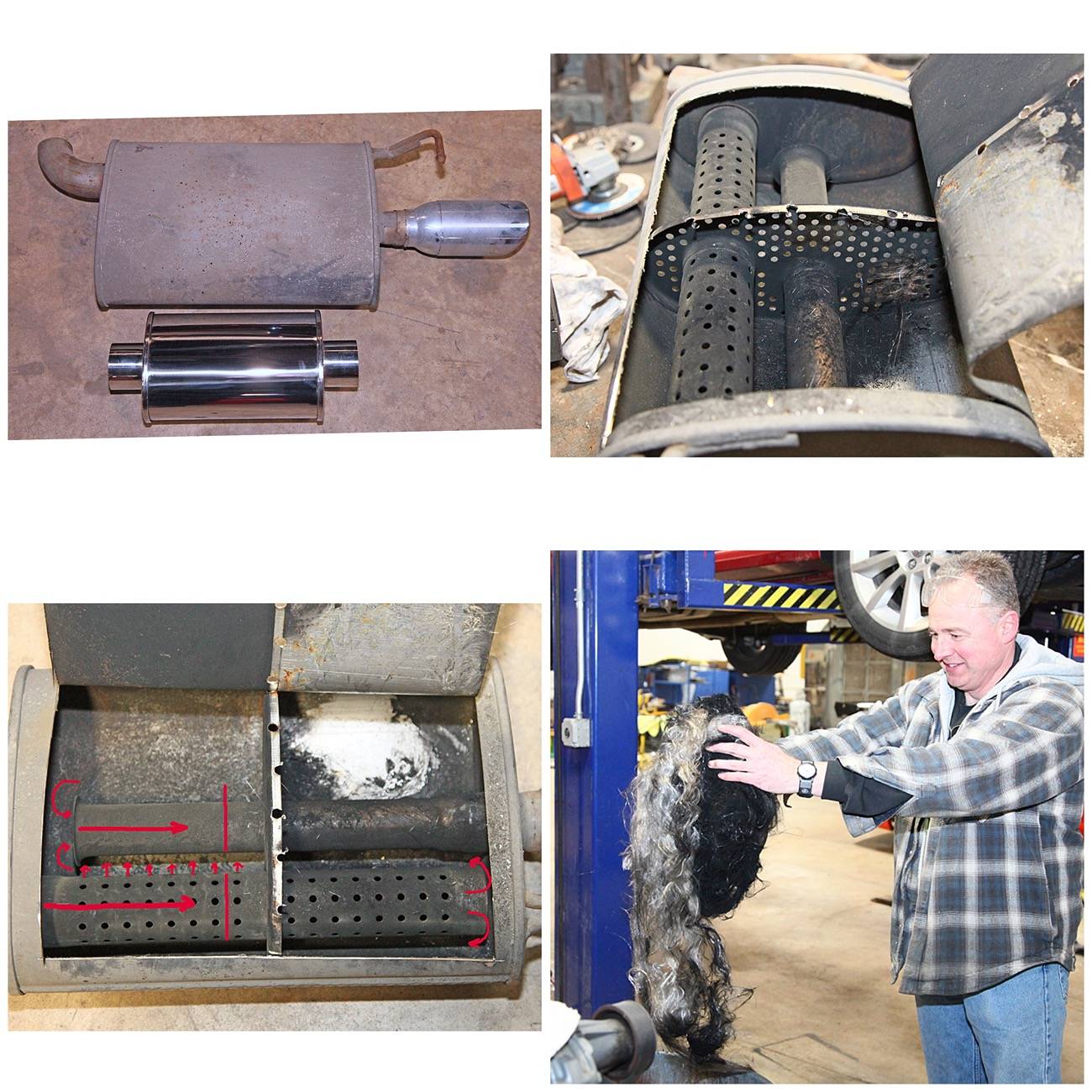
While I didn’t cut the stock muffler open, we did cut a stock Flex EcoBoost muffler open just to see how restrictive it was.
Ford Bronco Sport MRT Exhaust Installed Review IMG_0718


I highlighted the flow through the muffler. It was packed with fiberglass as well. I imagine the Bronco Sport muffler I just as restrictive.
Yes, this is the claim of pretty much all vendors selling exhaust systems, and I concede the logic. Your response is to my request for data is also the same: our customers are happy but sorry, no data, you'll just have to trust us.

But here's the question: how much reduction in exhaust system backpressure would you need to increase fuel economy by 20%? Do you even know how much reduction in back pressure over the OE system your product affords? Do you have data to show there is ANY reduction? We're not talking about swapping the entire exhaust system, just the muffler and the last few feet of pipe or so, right?

Ford, like all manufacturers, is under incredible pressure from both the government and consumers to eke the most possible efficiency out of its automobiles. I ask for data because I simply do not see how replacement of such a small portion of the exhaust system can have any significant effect on engine performance or efficiency. Is there some? Probably. How much is the question?

I have tested MRT systems on the dyno and at the drag strip. I paid for the dyno time out of my own pocket. I don’t remember the exact numbers but I distinctly remember seeing gains on my EcoBoost F150. I would dyno my Bronco Sport but the place I do the dyno at doesn’t have an AWD Dyno.

Also MRT never made improved MPG claims so there is nothing there to trust. There are just a couple of customers that have observed improved MPG. MRT is just explaining why we are seeing improved MPG.

If I find the time maybe I’ll peel open the stock muffler to see how restrictive it is.


Mark S.

Badlands
Well-Known Member
First Name
Mark
Joined
Oct 30, 2021
Threads
119
Messages
6,733
Reaction score
13,152
Location
St. Jacob, IL
Vehicle(s)
2021 Badlands | 2020 Escape
We don’t have lab-based backpressure data or dyno testing specifically focused on fuel efficiency
Do you have ANY pressure testing data?

In many cases, however, customers find their vehicle sounds so much better post-install
This is the primary reason most people purchase these products, which is fine. I get very skeptical when it comes to claims of performance gains.
 
Last edited:

Mark S.

Badlands
Well-Known Member
First Name
Mark
Joined
Oct 30, 2021
Threads
119
Messages
6,733
Reaction score
13,152
Location
St. Jacob, IL
Vehicle(s)
2021 Badlands | 2020 Escape
If I find the time maybe I’ll peel open the stock muffler to see how restrictive it is.
A visual inspection won't tell you how restrictive a muffler is, only an actual flow test will do that.
I have tested MRT systems on the dyno and at the drag strip. I paid for the dyno time out of my own pocket.
Was this before and after testing for just the exhaust, or were there other performance parts installed at the same time?
Also MRT never made improved MPG claims so there is nothing there to trust.
Yes, like all vendors selling these types of products they're very careful to say they make no claims, likely to avoid the inevitable lawsuits that would result. I would be happy to accept a flat statement that you should expect no performance improvement , but then they add:
...we’ve consistently heard from customers across all our turbocharged platforms that they notice modest improvements in MPG after installing one of our systems.
So, no we don't claim you will see any improvements, but our customers say you will, nudge, nudge, wink, wink.
 

Fishingjts

Badlands
Well-Known Member
First Name
john
Joined
Apr 8, 2025
Threads
5
Messages
75
Reaction score
234
Location
Michigan
Vehicle(s)
2025 Bronco Sport
Do you have ANY pressure testing data?


This is the primary reason most people purchase these products, which is fine. I get very skeptical about performance gains.
which is why MRT has NEVER made any performance claims. I’ve been buying exhaust systems from them since 2005. Never once have they claimed any type of gains whatsoever! NEVER. It’s all been customer feedback

Me, however I have a super calibrated Butt Dyno! ?

but seriously I get exactly where you are coming from! In fact I’m the same. I once spent a lot of $$$$ and got a lot of HATE to prove a certain well known company’s air intake made LESS power than stock! They had to redesign the tube and ship it out to customers. Yeah I’m very skeptical. So I don’t say things like my MPG improved lightly.
 

Fishingjts

Badlands
Well-Known Member
First Name
john
Joined
Apr 8, 2025
Threads
5
Messages
75
Reaction score
234
Location
Michigan
Vehicle(s)
2025 Bronco Sport
A visual inspection won't tell you how restrictive a muffler is, only an actual flow test will do that.

Was this before and after testing for just the exhaust, or were there other performance parts installed at the same time?

Yes, like all vendors selling these types of products they're very careful to say they make no claims, likely to avoid the inevitable lawsuits that would result. I would be happy to accept a flat statement that you should expect no performance improvement , but then they add:

So, no we don't claim you will see any improvements, but our customers say you will, nudge, nudge, wink, wink.
At some point it’s a matter of trust. If I wanted to I could provide you all kinds of test date. Heck give me a minute and I’ll have ChatGPT generate all kind of test results.

that being said I super happy with my MRT exhaust. Nobody promised me anything… I’m happy. Now I’m going to enjoy my drive home. ?


Bucko

Outer Banks
Well-Known Member
First Name
Kevin
Joined
Mar 16, 2023
Threads
55
Messages
2,494
Reaction score
3,706
Location
Gainesville
Vehicle(s)
2023 Ford Bronco Sport Outer Banks Area51
The combined city/highway EPA rating for the 1.5L is 26 mpg. A 20% improvement would put that figure at 31 mpg. If that's the case one wonders why Ford doesn't use the exhaust system you installed.
Because it is too loud for most buyers I'd say!

So, this is comes down to being advertised by the vendor to provide more noise, and therefore make you drive it more spiritually.

No thanks.
 
Last edited:
OP
OP
V8 Yankee

V8 Yankee

Outer Banks
Well-Known Member
First Name
Harold
Joined
Feb 6, 2022
Threads
18
Messages
359
Reaction score
574
Location
Miami
Vehicle(s)
21 Bronco Sport
Yes, this is the claim of pretty much all vendors selling exhaust systems, and I concede the logic. Your response is to my request for data is also the same: our customers are happy but sorry, no data, you'll just have to trust us.

But here's the question: how much reduction in exhaust system backpressure would you need to increase fuel economy by 20%? Do you even know how much reduction in back pressure over the OE system your product affords? Do you have data to show there is ANY reduction? We're not talking about swapping the entire exhaust system, just the muffler and the last few feet of pipe or so, right?

Ford, like all manufacturers, is under incredible pressure from both the government and consumers to eke the most possible efficiency out of its automobiles. I ask for data because I simply do not see how replacement of such a small portion of the exhaust system can have any significant effect on engine performance or efficiency. Is there some? Probably. How much is the question?
I understand this question may not have been directed to me specifically, but I feel compelled to contribute to the discussion. One of your points is indeed accurate: manufacturers are obligated to meet government-mandated efficiency standards. However, these production models often include margins that allow for additional efficiency gains through both software calibrations—performed by the original equipment manufacturer (OEM) or third-party tuners—and mechanical modifications. Ultimately, decisions regarding final specifications are influenced by a balance of cost, reliability, regulatory compliance, customer comfort, and broader corporate strategy. Beyond this point, the aftermarket industry traditionally assumes a role in optimizing performance, a pattern consistently observed throughout automotive history.


With respect to fuel economy improvements resulting from exhaust modifications, the empirical data is compelling. The numerical results clearly demonstrate gains—mathematics, after all, is objective. In my specific case, I have compiled over 62,000 miles of detailed fuel economy data following both intake and exhaust system modifications. This is benchmarked against a 5,000-mile baseline dataset recorded with the vehicle in its unmodified OEM configuration. All test conditions—including fuel type, driving behavior, environmental factors, and geographic location—have been held constant to ensure a reliable comparative analysis.


While I could delve deeper into the technical underpinnings, I lack access to a controlled laboratory environment that would allow for precise measurement of all combustion engine parameters. It’s worth noting that I do not believe MRT developed this particular exhaust system iteration with fuel efficiency as the primary design goal. Rather, the focus was on improving departure angle clearance and enhancing exhaust acoustics. Any observed improvements in mileage appear to be incidental rather than a primary marketing feature.
 

Fishingjts

Badlands
Well-Known Member
First Name
john
Joined
Apr 8, 2025
Threads
5
Messages
75
Reaction score
234
Location
Michigan
Vehicle(s)
2025 Bronco Sport
It’s worth noting that I do not believe MRT developed this particular exhaust system iteration with fuel efficiency as the primary design goal. Rather, the focus was on improving departure angle clearance and enhancing exhaust acoustics. Any observed improvements in mileage appear to be incidental rather than a primary marketing feature.
This!!! Very well said!!!

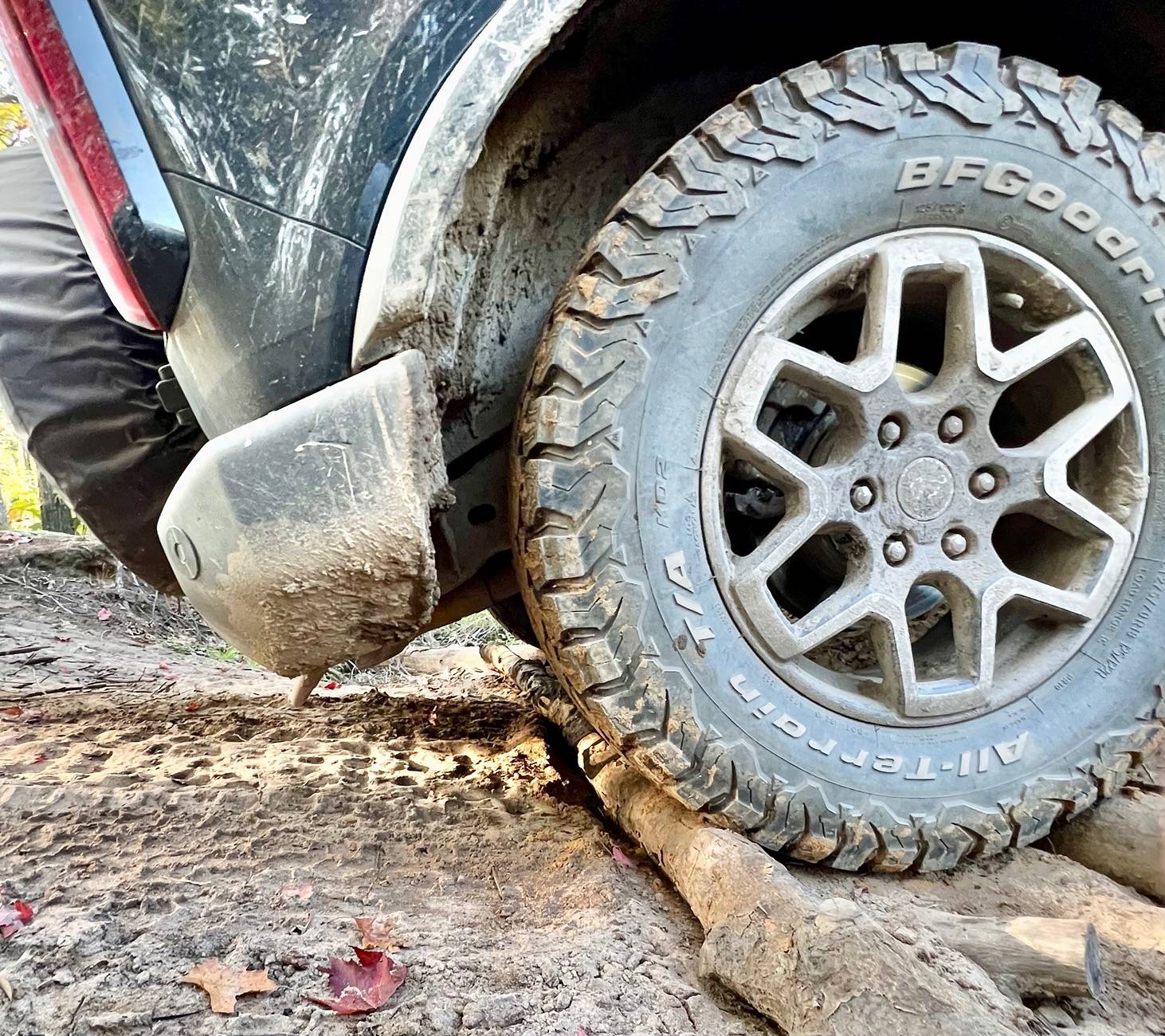
I was testing with previous Bronco. ?

Ford Bronco Sport MRT Exhaust Installed Review IMG_6668


Top