
Perhaps when … Pulling a 2000 pound trailer up a mountain in 30mph headwindJust filled up this evening with 91 Octane. it cost me about $8 more to fill the tank. Wi;; see what difference it makes.
Sponsored

Perhaps when … Pulling a 2000 pound trailer up a mountain in 30mph headwindJust filled up this evening with 91 Octane. it cost me about $8 more to fill the tank. Wi;; see what difference it makes.
No mountains anywhere near where I live and I don’t have any trailer. Headwinds I might face.Perhaps when … Pulling a 2000 pound trailer up a mountain in 30mph headwind


Okay, it’s been eight days since I filled up with 91 instead of 87.Just filled up this evening with 91 Octane. it cost me about $8 more to fill the tank. We’ll see what difference it makes.
At 1.00 per gallon or more upcharge for 91 octane for me, the juice ain’t worth the squeeze. It will be interesting to see what your longer term results will look like. I know keeping the engine out of boost helps the MPG’s a lot. I can easily improve a tankful buy driving differently but long term, my milage seems to reflect my general driving style.Okay, it’s been eight days since I filled up with 91 instead of 87.
I don’t have hard numbers so at this point it’s mostly impressions. I had no issue with how my BS performed before, but now it does feel a bit smoother at idle and it has better throttle response even in Eco mode. At first I wasn’t sure if the changes were real or perception coloured by expectation, but after a week it’s real.
In terms of economy I again don’t have hard numbers, but over my regular weekly distances the gas gauge needle has barely moved and the fuel mileage indicator says I’m using .2 litres per 100 klm. less. Thats about 1.5 mpg better than before with 87 octane in around town driving. Doesn’t sound like a lot, but over the course of a year that could add up. Over a year thats about 78 gallons, about 355 litres, or about 4-1/2 tanks of gas. If I’m buying 4-1/2 fewer tanks of gas in a year thats a decent savings. Off the top of my head thats about $200-$300 savings a year.
These are generalizations and I need to do some specific measuring and calculations. Soon I’ll be at one year (Oct 11th) since I picked up the car and I’ll have a general annual mileage number to start some more specific calculations over the year in terms of what 87 octane cost me vs. what 91 would cost over the same period. I’ll need to factor in paying more for a tank of gas while filling up less often.
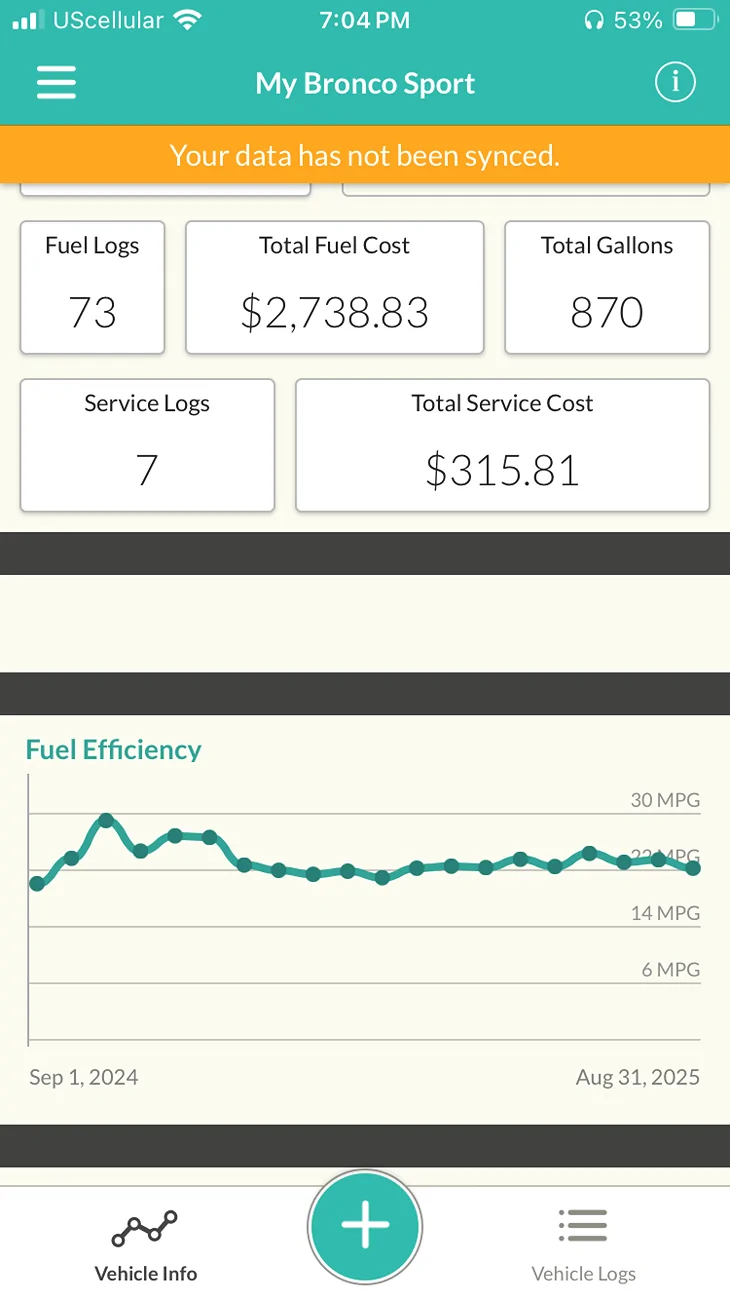
Check out the Fuelly App. Makes it pretty easy to track. I keep track of all my vehicles including my bike. The smallest difference for me is Costco at .90, Kwik Trip is 1.30 usd difference.^^ Yeah, nursing the car along is not my style. I don't have that kind of patience.
That said I want to see what kind of difference it makes. Yeah, paying extra for a tank of gas doesn't have much appeal for a bit better gas mileage, but if it makes a significant difference over a longer span of time then that is worth considering.
It makes it a bit trickier because day-to-day gas prices fluctuate so you kinda have to pick a median average price and use that as a baseline. I don't have enough patience to record every single dollar and along with every single litre of fuel.

Per AAA, the US national average difference between Regular & Premium (specific octanes vary state to state) is 79 cents: $3.20 vs. $3.99. That's a 25% increase, not insignificant.Doing more precise calculations. From what I can see in real world use is you pay more for the higher octane, but the small gain in improved fuel economy doesn't offset the higher price. You don't pay a lot more for the higher octane and slightly improved fuel economy, but you don't gain anything in terms of fuel savings.
So the only real advantage of the higher economy is smoother running of the engine and better performance.
I wish I were closer to the national average. It was 1.30 per gallon more for 93 vs 87 a few days ago when I filled up.Per AAA, the US national average difference between Regular & Premium (specific octanes vary state to state) is 79 cents: $3.20 vs. $3.99. That's a 25% increase, not insignificant.
Canadian price deltas are less easy to determine, the CAA seems to just aggregate everything into one number without distinction between grades or provinces, only reporting a single grade (95) nationally.
and you don't even get that if you have cruise control on and are doing a highway trip. if you drive it like a race car and are into high boost and higher rpms, that's when you will see the better performance from premium.So the only real advantage of the higher economy is smoother running of the engine and better performance.
Yeah, I suspect thats where you would see a better gain all around. Short trips around town don’t make it worth it largely because of the repeated acceleration from a standstill—you’re constantly overcoming inertia to accelerate and you’re never doing a constant speed for any decent length of time. Succinctly all the stop-and-start driving.and you don't even get that if you have cruise control on and are doing a highway trip. if you drive it like a race car and are into high boost and higher rpms, that's when you will see the better performance from premium.