OP
OP


- First Name
- Nicholas James
- Joined
- Oct 8, 2024
- Threads
- 4
- Messages
- 86
- Reaction score
- 50
- Location
- LaPlace La
- Vehicle(s)
- Bronco Sport Heritage 2023
- Thread starter
- #61
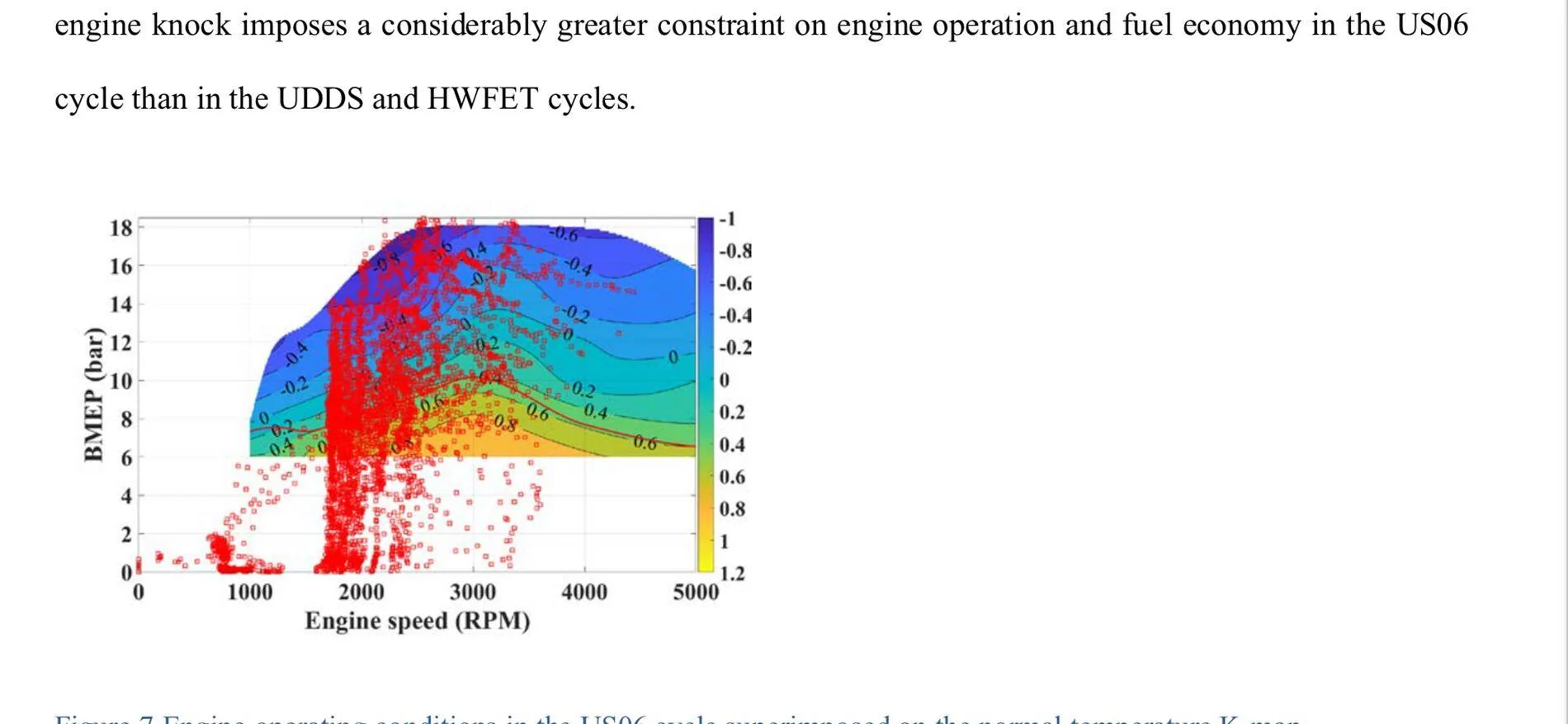
This paper, sponsored by FORD, shows the effect for the FORD 2.0L ecoboost engine.… is usually accomplished by retarding timing, decreasing boost pressure,.
In normal driving, we don’t go reach that condition much, so the fuel Octane rating has a smaller effect on MPG. (<20%)
When we drive in hotter conditions and/or put the engine under heavier loads, then we may be limited more often( to 70%). There is a much larger effect on MPG.
Exactly when the Owners manual recommends we use the higher Octane fuels!
——-
—-/4 Conclusions
This work investigated the significance of fuel RON and MON to the drive cycle fuel efficiency of vehicles
powered by a 2.0-L, 4-cylinder GTDI (gasoline turbocharged direct injection) engine, using the Octane Index approach. The analysis only accounted for the direct effects of RON and MON on an existing engine, not for
opportunities to optimize engine design e.g. by changing compression ratio. Using vehicle test data and engine K-maps, the fuel efficiency loss caused by measures to avoid engine knock, termed knock-limited fuel
efficiency loss (KLFEL), was calculated for five drive cycles, and the effects of changes in RON and MON were quantified. The major conclusions of this work are as follows.
1. The GTDI engine vehicle was not very knock-limited in the EPA UDDS and HWFET cycles.
Despite approximately 20% of fuel consumed under knock-limited conditions, the engine was not greatly retarded from MBT timing. The KLFEL therefore accounted for no more than 0.5% of the total fuel consumed.
2. The vehicle was more knock-limited in the US06 cycle, with 68% of the fuel consumed under
knock-limited conditions and 6.3% extra fuel consumed for knock control. The KLFEL-weighted K (KKLFEL) was -0.44.
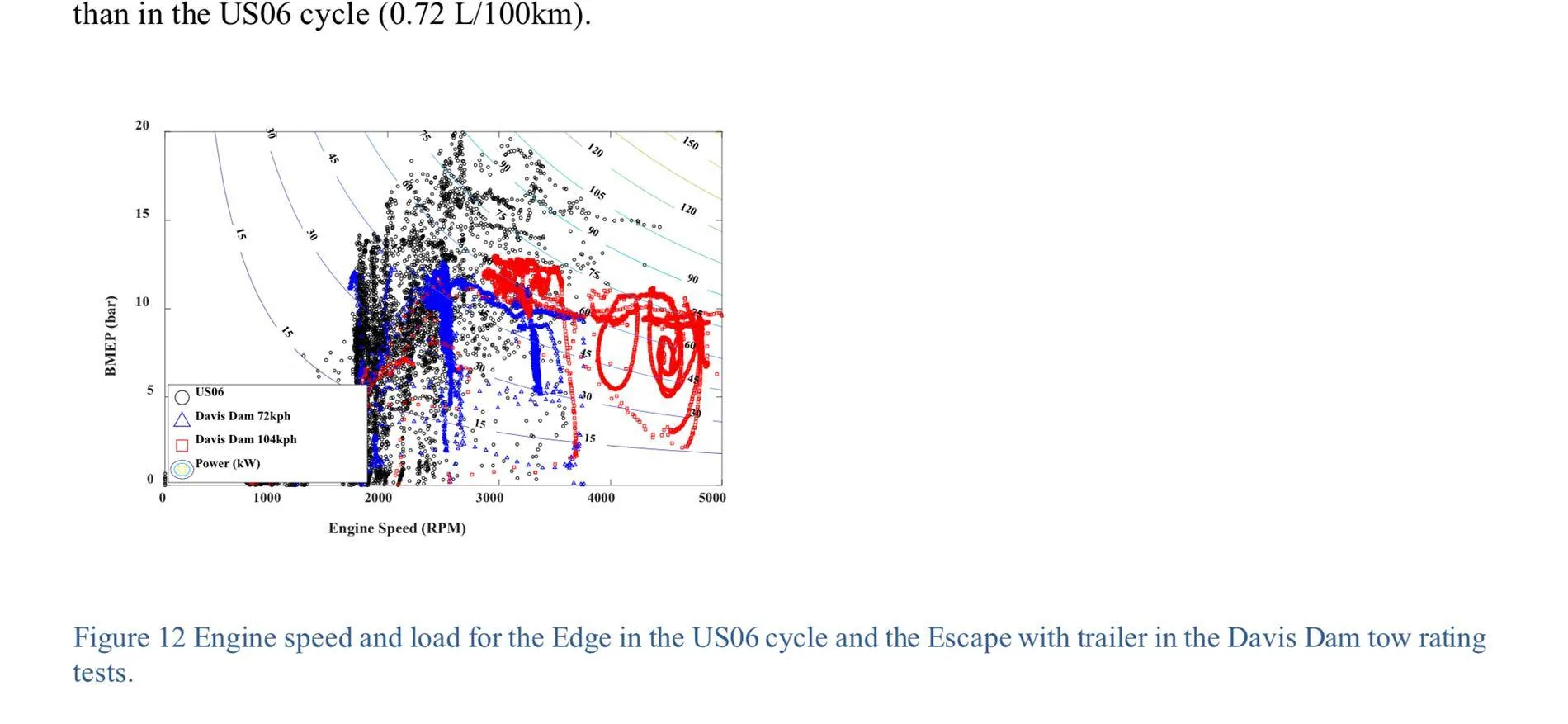
3. The vehicle was significantly knock-limited in the hot-weather Davis Dam towing tests, with up to 77% of fuel consumed under knock-limited conditions and 5.5% extra fuel consumed for knock control. The KKLFEL was -0.11 and +0.12 for the two Davis Dam tests.
4. Fuel efficiency loss due to knock avoidance (KLFEL) mostly occurred when K was negative. The significance of RON and MON to fuel efficiency was characterized by the parameter KKLFEL which ranged from -0.44 to +0.12 for the five cycles studied.
For all cycles with non-trivial KLFEL, increasing RON effectively improved fuel efficiency while decreasing MON had only a minor effect.
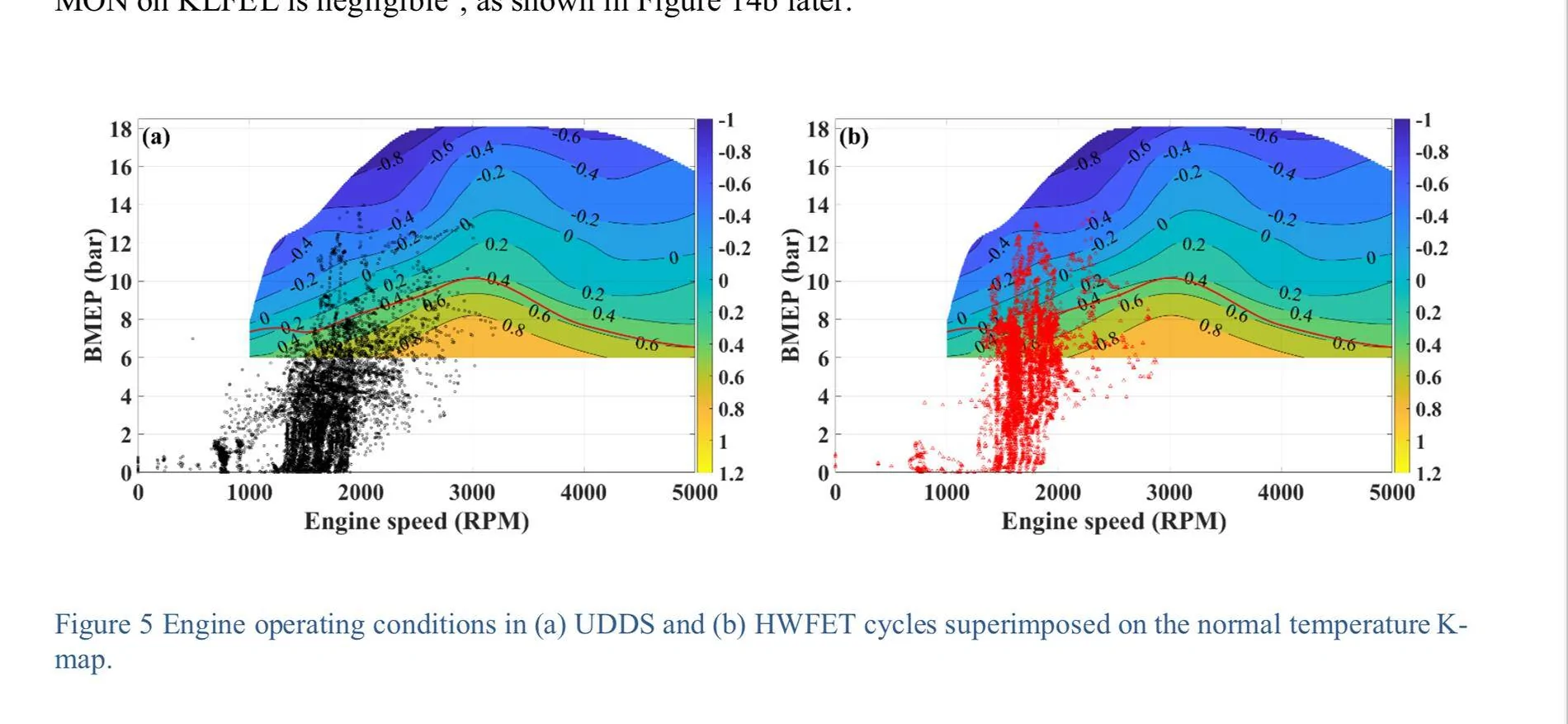
The test below (left normal test, right higher temp test) shows normal driving conditions versus the knock limit is in effect. (everything above the red line)
we are only in knock limited conditions about 20% of the time.
The knock-limiting has a big effect on fuel economy. Fuel economy plummets the more the limit is inplsnebted
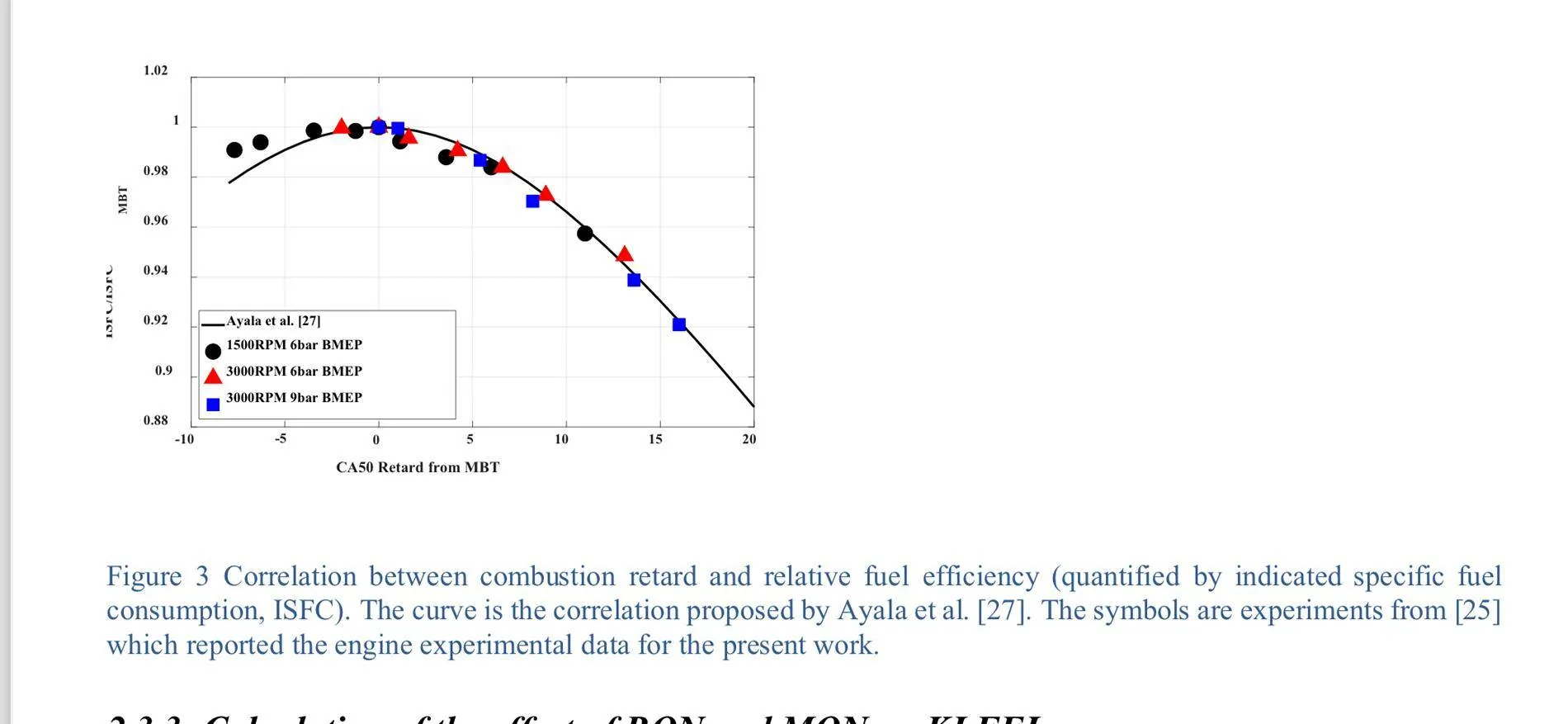
When the engine is under heavy load, the driving can be in the knock-limited range for up to 70% of the