

Bucko

Outer Banks
Well-Known Member
First Name
Kevin
Joined
Mar 16, 2023
Threads
55
Messages
2,494
Reaction score
3,706
Location
Gainesville
Vehicle(s)
2023 Ford Bronco Sport Outer Banks Area51
Parrifin wax eh?, always wonders what that sludge was made of.
Fun story , my first motorcycle a BSA , had a dry sump with an external oil tank , it was old , I would check the oil and could see the level which I topped up regularly of course as it leaked out the bottom! Came to do an oil change a few weeks later I drained the oil but only got about a pint instead of the 3 quarts the books said.
Came to find out after removing the oiltank that I it probably haddn't had a full oil change in years! The tank was almost completely full of sludge! The poor little oil pump was pulling what little oil it could find around the engine! Sludge is a real think! Cheers Warren
Back in the day, Quaker State was the worst when it came to Paraffin based oils. Later, they changed their base and later added detergents to their oils and boasted how clean their oils were.

I too can remember removing valve covers off of an engine with miles on it. Could always tell the oils used were high in paraffin.
Sponsored


 

Mark S.

Badlands
Well-Known Member
First Name
Mark
Joined
Oct 30, 2021
Threads
119
Messages
6,733
Reaction score
13,154
Location
St. Jacob, IL
Vehicle(s)
2021 Badlands | 2020 Escape
In years past, lots of oil sludge buildup was due to the paraffin (wax) oil base that was used.
I believe this is a myth. Oil from many different manufacturers are paraffin based, even some of the "full-synthetic" oils on the market. Paraffin-based oil is also used to make gasoline. Manufacturers use a variety of methods to reduce paraffin (wax) in paraffin-based oils. These are part of the refining process, and they all result in paraffin levels nowhere near enough to support coagulation of the wax molecules, even in conventional motor oils.

The number one cause of sludge in engines is failure to change the oil at the proper interval. The second most common cause is poor oil circulation within the engine that results in oil getting trapped in the engine's oil galleries. The trapped oil is eventually heated enough to turn to sludge.

Here's a good article about the subject.
 

Bucko

Outer Banks
Well-Known Member
First Name
Kevin
Joined
Mar 16, 2023
Threads
55
Messages
2,494
Reaction score
3,706
Location
Gainesville
Vehicle(s)
2023 Ford Bronco Sport Outer Banks Area51
I believe this is a myth. Oil from many different manufacturers are paraffin based, even some of the "full-synthetic" oils on the market. Paraffin-based oil is also used to make gasoline. Manufacturers use a variety of methods to reduce paraffin (wax) in paraffin-based oils. These are part of the refining process, and they all result in paraffin levels nowhere near enough to support coagulation of the wax molecules, even in conventional motor oils.

The number one cause of sludge in engines is failure to change the oil at the proper interval. The second most common cause is poor oil circulation within the engine that results in oil getting trapped in the engine's oil galleries. The trapped oil is eventually heated enough to turn to sludge.

Here's a good article about the subject.
Good article, but it does not mention that detergents were also added to combat the paraffin properties used as the base. So its not a myth that paraffin leads to sludge.

As you mention, and I'll add, aged oil and heat will add to the eventual sludge buildup, due in part to the detergents that will breakdown over time.

Synthetics help in that they withstand higher temps, but the detergents will still wear down.
 

Mark S.

Badlands
Well-Known Member
First Name
Mark
Joined
Oct 30, 2021
Threads
119
Messages
6,733
Reaction score
13,154
Location
St. Jacob, IL
Vehicle(s)
2021 Badlands | 2020 Escape
Good article, but it does not mention that detergents were also added to combat the paraffin properties used as the base. So its not a myth that paraffin leads to sludge.
In very general terms, yes paraffin leads to sludge, but probably not in the way suggest. The term "paraffin" covers a wide range of chemical compounds. The kind of paraffin left in motor oils following manufacturing for automotive use is not the kind used to make candles, which I believe is the basis of claims that paraffin in oil leads to sludge.

Paraffin is a common name for a type of hydrocarbon chain called "alkanes." Almost all motor oils contain alkanes, including some full-synthetic oils. There are alkanes--AKA paraffin--that remain gaseous at room temperature; there are some that are liquid at room temp such as kerosene and other types of oils; then there are those that form crystalline structures at room temperature. The latter are what form the kind of wax used to make candles, and they are refined out of oil used to produce motor oil. These long-chain paraffins refined out eventually become part of a waste product called petroleum sludge, which is where I suspect the misunderstanding about paraffins in motor oil producing sludge originates. The paraffins and processes that result in petroleum sludge are not present in internal combustion engines.

Yes, detergents are meant to mitigate sludge production, but not because of paraffin wax. Detergents (and other additives) are meant to neutralize acids formed as a byproduct of combustion, and combat oxidization resulting from oil heating. Oil neutralizes acids, and other contaminants such as water, by holding them in suspension. These contaminates are still there, they remain in the oil, but the detergents and other additives mitigate their impact such that they do not affect the oil's ability to do its job of lubricating internal engine parts. Holding contaminants in suspension prevents them accumulating together, which part of the sludge production process. Detergents are consumed as they do their job, which is one of the factors determining an oil's service life. The other major factor is oil quantity. A given quantity of motor oil may hold only hold so many contaminant particles in suspension before those particles begin to glob together, a process called agglomeration, thereby increasing the viscosity. If you increase an oil's viscosity you change its flow characteristics, which can prevent oil getting to all internal parts of the engine. Slowing the flow of oil around hot components promotes further oxidization and volatility, which further increases viscosity, so it's a dangerous cycle. Allow this cycle to continue enough and the oil will be thick enough and contaminated enough to become the substance we call sludge. Thus, contaminate agglomeration resulting from failure to follow recommended oil service intervals is the number-one cause of sludge, not wax.

So yes, detergents are added to oils to combat the properties of oil that can lead to sludge. Those properties, however, are present in both paraffin-base oils and non-paraffin oils.

The video below explains in detail the process of oil break down and what happens if you don't change your oil on time.

 
Last edited:

PaulOinMA

Badlands
Well-Known Member
First Name
Paul
Joined
Jun 9, 2021
Threads
2
Messages
457
Reaction score
515
Location
MA
Vehicle(s)
'23 BS, '22 FE, '04 Audi TT, '66 Austin Moke
First oil change on my wife's '23 BL yesterday. Very easy on ramps. Bash plate is nice and heavy. Like the Dieselgeek skid plate I added to my 2011 VW JSW TDI.

Very easy to remove, too. Slotted spots for the two rear bolts is really helpful. Thanks for the tip!

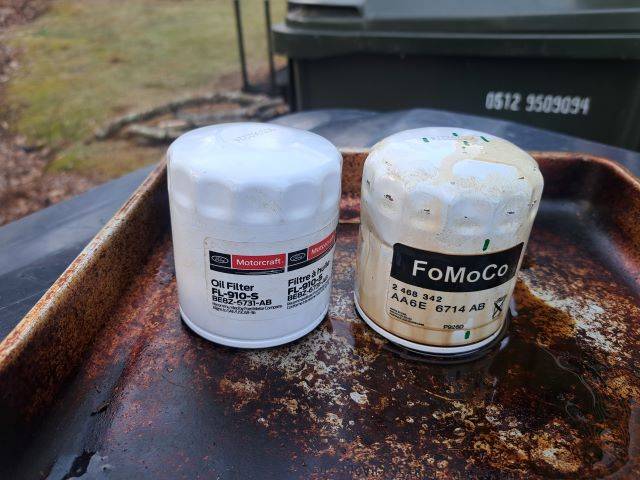
OE oil filter was same size as FL-910S.

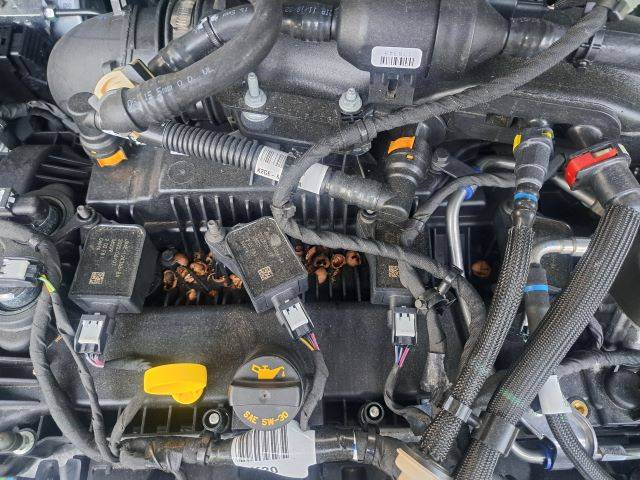
Would have missed the nut shells from the chipmunks if I had an engine cover. Just checked the oil and washer fluid before my wife went to visit her mom. Think the shells are a new addition. Don't see how I could have missed them earlier this month. :)

Ford Bronco Sport 1st Oil Change on Bronco Sport Badlands -- Thoughts and Things Learned! 20240227_162806 - Copy


Ford Bronco Sport 1st Oil Change on Bronco Sport Badlands -- Thoughts and Things Learned! 20240227_165032 - Copy


GJarrett

Big Bend
Well-Known Member
Joined
Oct 9, 2021
Threads
6
Messages
70
Reaction score
106
Location
Bradenton FL
Vehicle(s)
2024 Bronco Sport, 2017 EcoBoost Mustang
Regarding old paraffin oils, when I was a teenager I helped tune up my dad's 289 V8 in our 1965 Ford Fairlane station wagon.... he always used Quaker State. This was probably sometime around 1974 and the engine had well over 100k miles on it.

Dad was very anal about maintenance and never missed an oil change. I clearly remember very thick sludge caked on the engine when we took off the valve covers, and spent hours soaking the head and valve covers in cleaner and scraping all that crap off.
 

cprcubed

Big Bend
Well-Known Member
First Name
Patrick
Joined
Nov 16, 2022
Threads
1
Messages
594
Reaction score
957
Location
Parker, TX
Vehicle(s)
2022 Cyber Orange BS BB, 1997 Ford F250 HD 7.3 PSD
I clearly remember very thick sludge caked on the engine when we took off the valve covers, and spent hours soaking the head and valve covers in cleaner and scraping all that crap off.
You needed something like the old "hot tank" that we had in high school Auto Shop back around that same time period. It would take everything (and I mean everything) off parts! Cheers!
Sponsored


Top