OP
OP

- Thread starter
- #31
Exactly - I think you are spot on. The ride difference is readily noticeable. It rides very differently, if we’re talking about things other than acceleration/power.Example of real-world testing exist on the interwebs. At this link, a Honda NSX owner performed acceleration testing on heavier vs lighter wheel/tire combos.
Here's a video where the producers test acceleration for a minivan:
The bottom line is you may or may not notice the difference in acceleration going to heavier tires. It depends heavily on your driving style and how finely tuned your butt dyno is.
The more important impact of heavier tires for me is handling, ride quality, and suspension component life. On butter-smooth roads you will likely notice no difference. On bumpy, pothole-filled roads, a heavier tire will not handle as well, will not ride as smoothly, and will place greater demand on other suspension components. A heavier wheel/tire will move up and down farther than a lighter equivalent, and more movement equals more vibration transmitted to the cabin. In addition, more movement equals more wear and tear on other suspension components.
How much additional wear? Who knows? These cars haven't been around long enough for owners to provide long-term reports on modified vehicles. I suspect, however, if you're putting heavier tires on your car you are willing to accept the downsides to meet whatever requirement prompted the change in the first place.
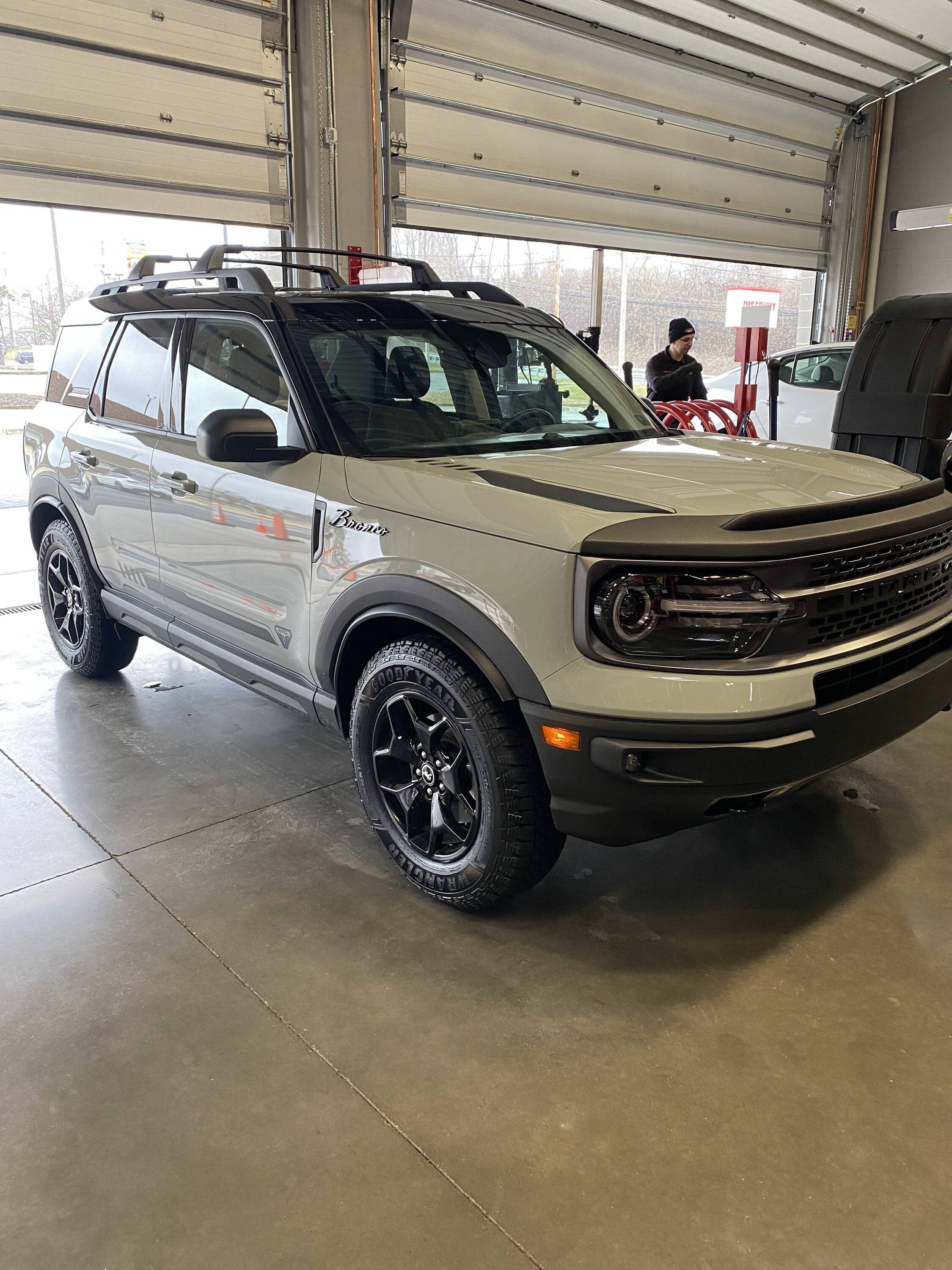
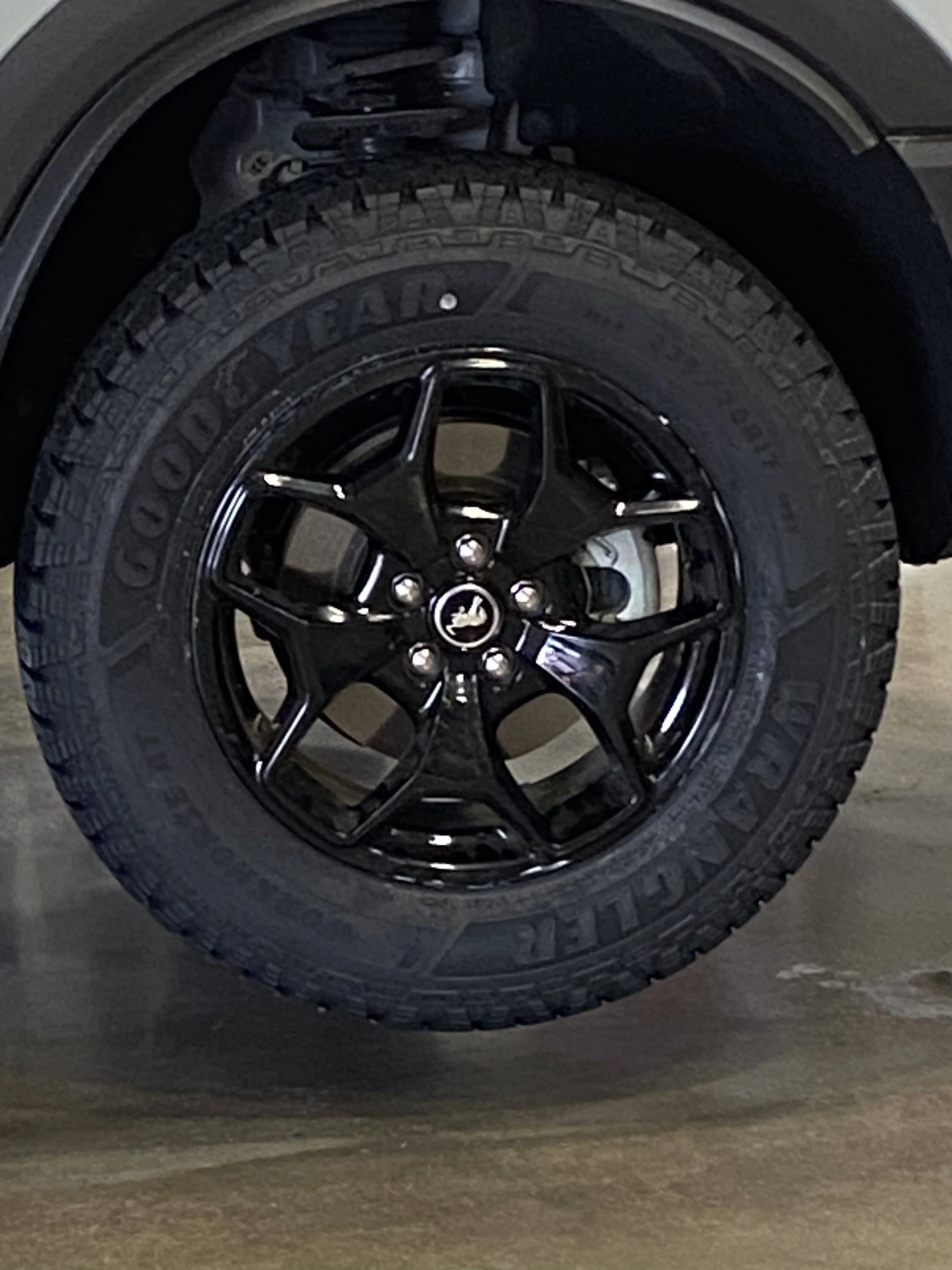
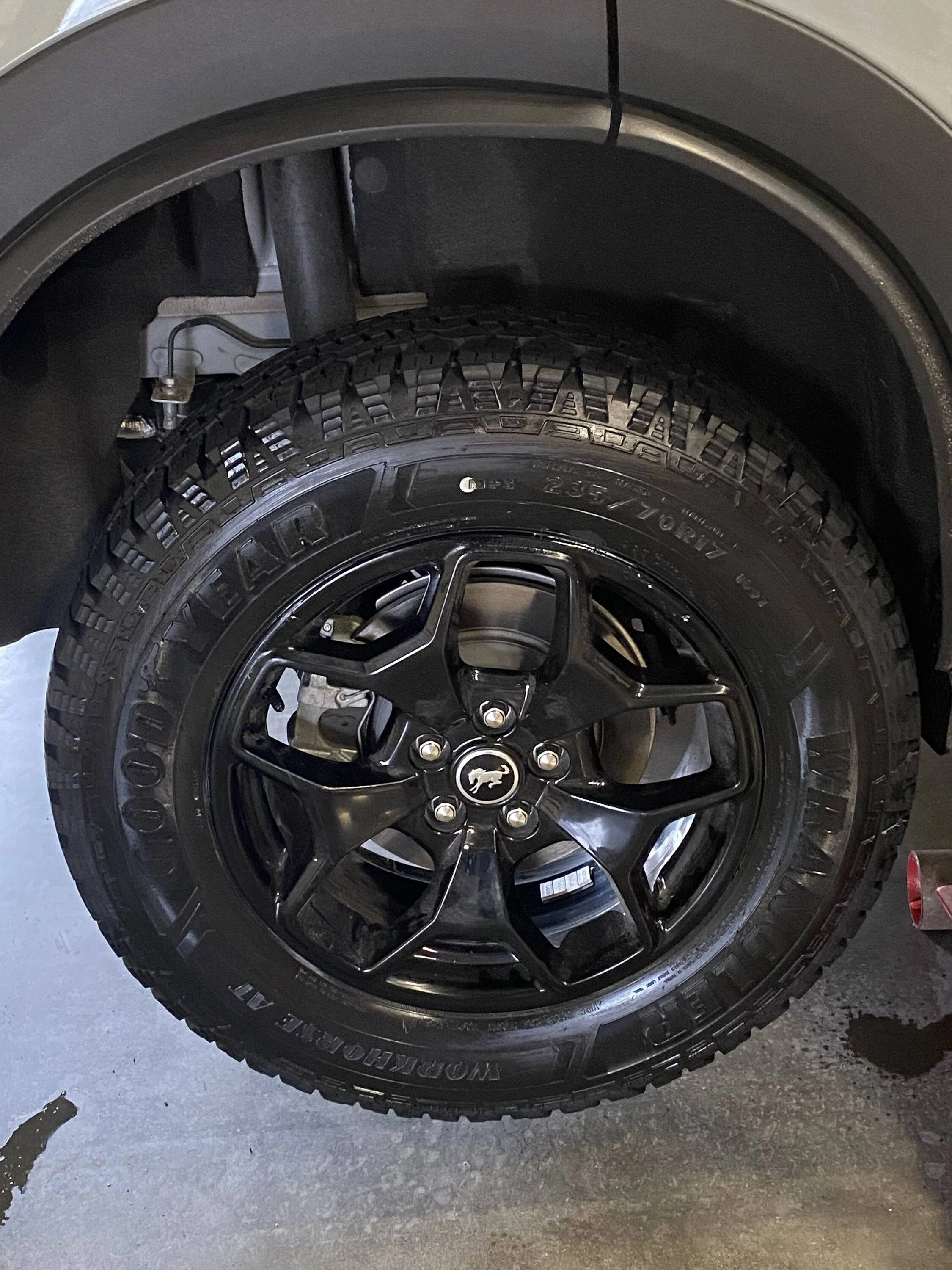
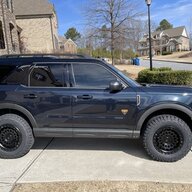
The Bronco Sport has a very car-like drive, from the factory. Smooth and easy. This set up changes that driving experience completely. It’s now very truck-like. Road noise is louder, vibrations and bumps in the road are far more noticeable. It’s not a change that my wife would prefer, but my son loves it.
This is definitely not something I would recommend if gas mileage, smoothness of the ride, a silent cabin, and to your point, probably even longevity of parts, are what you are after.
Sponsored
Last edited: