

- First Name
- Mark
- Joined
- Oct 30, 2021
- Threads
- 119
- Messages
- 6,733
- Reaction score
- 13,149
- Location
- St. Jacob, IL
- Vehicle(s)
- 2021 Badlands | 2020 Escape
This is entirely speculative. You are entitled to your opinion, but you can't claim any specific knowledge of the issue unless you are involved in the legal proceedings. In my opinion, you are viewing the claims of injury from a perspective least flattering to Ford while ignoring they originate from plaintiffs suing a large, rich corporation. In my experience, I've found such claims to be among the least reliable. They may very well be true, but until proven Ford is entirely correct to use the word "possible."This is getting into a semantics game where Ford is calling them "potential injuries" to the NHTSA as a way to not directly admit legal liability in the ensuing lawsuits as a result of these fires.
This is yet more speculation. What's the point of making these kinds of assumptions?Basically, this has reached a point where the NHTSA not only doesn't trust the information that ford has volunteered (four alleged injuries), but has used their legal power to compel Ford to provide a shitload of data for the NHTSA to be able to conduct their own investigation because they don't trust Ford to have properly investigated/disclosed this.

You can call my entire first part of my post speculative on the number of injuries. While I would be inclined to say that the messaging between the lines is obvious, I would concede that anything is speculative in an absence of information.This is yet more speculation. What's the point of making these kinds of assumptions?
The NHTSA legally compelling a ton of information from Ford is telling in a non-speculative way. Let's just quote from the first page of the letter the NHTSA sent to Ford:
I needn't speculate on the basis of the NHTSA's investigation, because they've outright told FoMoCo that they don't believe the recall addresses the actual root cause, does not investigate the cause of the issue of fuel injectors cracking, and thus, they have decided to investigate the recall program and related safety concerns.NHTSA said:Based on our review of the alleged defect, the resulting consequences, and the recall’s remedy program, ODI believes that the remedy program does not address the root cause of the issue and does not proactively call for the replacement of defective fuel injectors prior to their failure; therefore, ODI has decided to investigate the adequacy and various safety concerns of the remedy program described in NHTSA Recall 24V-187.
If the NHTSA was satisfied that Ford's investigation/remedy/disclosures were enough, we would still be at the point of letting Ford conduct voluntary recalls. The reason that the NHTSA is using their oversight authority to compel this information is because they don't trust out of either malice, mistakes, or ignorance, for Ford to have properly done this themselves.
If the NHTSA trusted Ford's investigation/disclosures, this letter would not exist, and we would not be having this conversation.
- First Name
- Mark
- Joined
- Oct 30, 2021
- Threads
- 119
- Messages
- 6,733
- Reaction score
- 13,149
- Location
- St. Jacob, IL
- Vehicle(s)
- 2021 Badlands | 2020 Escape
You've added to what's written:The NHTSA legally compelling a ton of information from Ford is telling in a non-speculative way. I needn't speculate on the basis of the NHTSA's investigation, because they've outright told FoMoCo that they don't believe the recall addresses the actual root cause, does not investigate the cause of the issue of fuel injectors cracking, and thus, they have decided to investigate the recall program and related safety concerns.
There's nothing there about a lack of investigation. The NHTSA has apparently taken a position--for reasons we are not privy to--that Ford should replace the OE fuel injectors to address the problem. NHTSA wants Ford to share the data it collected and the reasoning used to support its decision NOT to replace the OE injectors.ODI believes that the remedy program does not address the root cause of the issue and does not proactively call for the replacement of defective fuel injectors
All we know is that the NHTSA is directing further investigation of this issue--we don't know why. This is my primary disgruntlement: needless speculation. Let's stick to what we know.The reason that the NHTSA is using their oversight authority to compel this information is because they don't trust out of either malice, mistakes, or ignorance, for Ford to have properly done this themselves.
Last edited:
Latest on the NHTSA investigation is... Ford had until October 11th to respond, they asked for a two week extension to answer pretty much all the NHTSA questions, and it was granted. Ford now has until October 25th to respond (unless they ask for another extension).
I am not sure if Ford's responses to the NHTSA will be public, redactions are allowed for confidential business info, may be a whole lot of black boxes if they do show anything to the public. I'll be checking back in a few weeks.
I am not sure if Ford's responses to the NHTSA will be public, redactions are allowed for confidential business info, may be a whole lot of black boxes if they do show anything to the public. I'll be checking back in a few weeks.
There is a injury and/or damage threshold that the NHTSA will base their findings on. They will compile information from all insurance records that reference fire in the claim records. From there they will need to narrow it down to "injector related". And then narrow it down to "defective injectors". This is where it gets difficult when compiling verifiable numbers.
The threshold is anyones guess. Ford can easily absorb a certain amount of claims or settlements versus a massive replacement recall. Its all in the numbers. By having a verifiable issue Ford has already acknowledged the problem exists. By alreading authorizing a drain hose installed to mitigate the problem is another acknowledgement of the problem. This second iteration of investigation shows there has been more instances of suspected defect related fires. Or at least injector failures that resulted in fuel leaks. Either way it will come down to numbers.
The threshold is anyones guess. Ford can easily absorb a certain amount of claims or settlements versus a massive replacement recall. Its all in the numbers. By having a verifiable issue Ford has already acknowledged the problem exists. By alreading authorizing a drain hose installed to mitigate the problem is another acknowledgement of the problem. This second iteration of investigation shows there has been more instances of suspected defect related fires. Or at least injector failures that resulted in fuel leaks. Either way it will come down to numbers.
Last edited:
- First Name
- Mark
- Joined
- Oct 30, 2021
- Threads
- 119
- Messages
- 6,733
- Reaction score
- 13,149
- Location
- St. Jacob, IL
- Vehicle(s)
- 2021 Badlands | 2020 Escape
I disagree. It's evidence that Ford neglected to create a drain path in the event of an under hood fuel leak. We'll have to wait for the NTSB to determine if Ford is waffling on the fuel injector design.By alreading authorizing a drain hose installed to mitigate the problem is another acknowledgement of the problem.
I agree with that 100% I don't see how you could have misinterpreted what I wrote on the subject.I disagree. It's evidence that Ford neglected to create a drain path in the event of an under hood fuel leak. We'll have to wait for the NTSB to determine if Ford is waffling on the fuel injector design.
- First Name
- Mark
- Joined
- Oct 30, 2021
- Threads
- 119
- Messages
- 6,733
- Reaction score
- 13,149
- Location
- St. Jacob, IL
- Vehicle(s)
- 2021 Badlands | 2020 Escape
I inferred from your post that you were saying Ford's issuing the drain-tube recall is evidence of an issue with the injectors. If that's not what you meant I apologize. This subject has been discussed ad nauseum; I try to keep the discussion focused on facts rather than speculation.I agree with that 100% I don't see how you could have misinterpreted what I wrote on the subject.
I am part of a class action suit on the subject. Although the suit was intially dismissed it was resubmitted with additional information that developed. Not saying I am privy to the legal proceedings and that I know what the info is. However there is something to merit a second hearing on the subject. I was never for the "fix" that Ford implemented, that alone didn't address the issue, if any. All I know that if there was a catastrophic injector failure the potential for a fire is real, drain hose or not. I'll leave it to the investagators to determine the merit of the case.I inferred from your post that you were saying Ford's issuing the drain-tube recall is evidence of an issue with the injectors. If that's not what you meant I apologize. This subject has been discussed ad nauseum; I try to keep the discussion focused on facts rather than speculation.


- First Name
- Patrick
- Joined
- Nov 16, 2022
- Threads
- 1
- Messages
- 590
- Reaction score
- 952
- Location
- Parker, TX
- Vehicle(s)
- 2022 Cyber Orange BS BB, 1997 Ford F250 HD 7.3 PSD
Why wouldn't that apply to any gasoline fuel-injected vehicle? Cheers!All I know that if there was a catastrophic injector failure the potential for a fire is real, drain hose or not.
If any FI vehicle has had a string of leaks and/or fires and those issue's point to the injectors than I believe a recall would be immediately issued. As far as what amount triggers a recall is undetermined, that's up to the NHTSA to determine. I'm sure over the last 30 years or so there has been many recalls for the same thing throughout the industry. There are many components from the fuel tank to the injectors that could be defective, assembled wrong, or have a poor design which could leak and potentially ignite. I would like to see the technical report that NHTSA comes up with. The whole issue is vague at this point. There is supplemental details that have been added to this new iteration of the investigation. It may not come to anything or it may lead to recall. At this point its wait and see.
- First Name
- Mark
- Joined
- Oct 30, 2021
- Threads
- 119
- Messages
- 6,733
- Reaction score
- 13,149
- Location
- St. Jacob, IL
- Vehicle(s)
- 2021 Badlands | 2020 Escape
"A string of" can mean different things to different people.If any FI vehicle has had a string of leaks and/or fires and those issue's point to the injectors than I believe a recall would be immediately issued.
This is the key. What percentage of 1.5L-equipped Bronco Sports have experienced fuel injector failure? Is that percentage more or less than the industry average? What percentage of those has resulted in a fire? Again, more or less than average. Perhaps most importantly, what percentage of vehicle fires attributed to fuel injector failure had been modified with a drain hose as specified by the recall?As far as what amount triggers a recall is undetermined,
Unfortunately, with lawsuits outstanding it's unlikely Ford will share any more information than it absolutely has to.I would like to see the technical report that NHTSA comes up with.
Last edited:
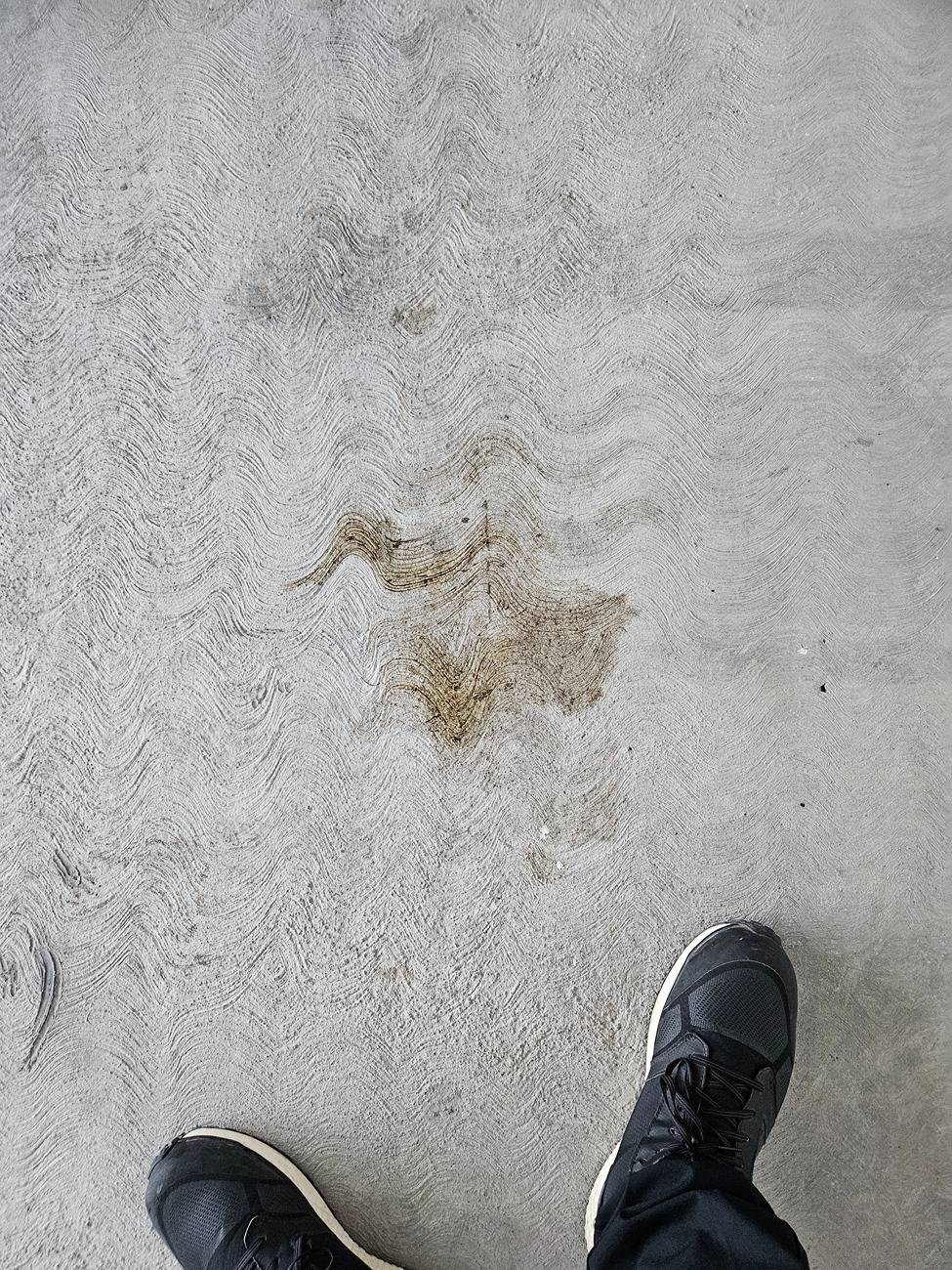
So I had the tube drain installed in my 2022 BS around a year ago, did not have any issues until just recently, I noticed that there are residues on my garage, first it was caused by an oil leakage due to a damaged Oring that was already replaced at the dealership, but the truck continued to stain my garage and took the car to the dealership again and they said the original oil leak was confirmed to be fixed and it is completely normal to have that stain, as liquid is draining through the tube, which is the actual solution for the recall, anyome else is having this issue? Am I going to have a permanent leak due to the drain tube? It is weird to me that it did not leak from day one of the drain tube insgallation, but only until now.

- First Name
- Mark
- Joined
- Oct 30, 2021
- Threads
- 119
- Messages
- 6,733
- Reaction score
- 13,149
- Location
- St. Jacob, IL
- Vehicle(s)
- 2021 Badlands | 2020 Escape
The drain tube recall was to allow a route for fuel to drain away from hot engine components in the event of a fuel leak. It connects to a drain hole in the side of the engine near the top. If you are observing OIL coming from this tube you should have your car checked by a mechanic. You can also take a look at the top of the engine yourself to see where oil might be coming from. I can't think of how enough oil can get into this drain tube absent significant issues that warrant your immediate attention.It is weird to me that it did not leak from day one of the drain tube insgallation, but only until now.
Alternatively, the drain tube you see oil draining from is not the same drain tube installed as part of the recall.
Sponsored